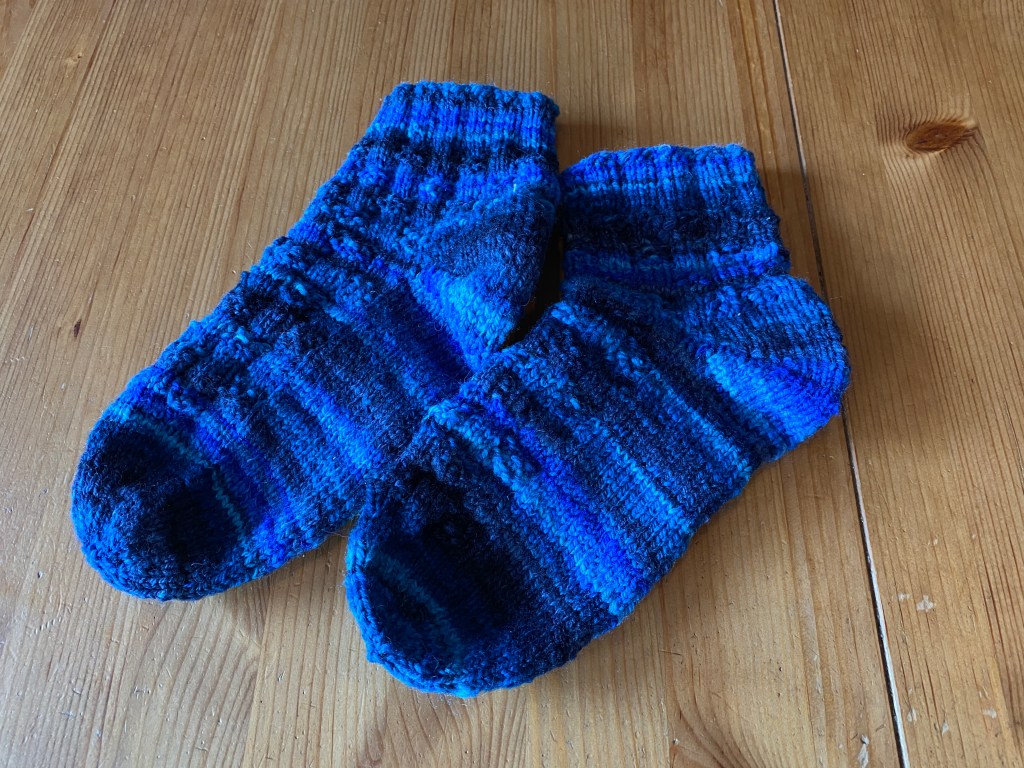
Sometimes the greatest enemy of an exciting project is the next, equally as exciting, project waiting in the wings. Temptation to jump onto new ideas can be so great, that unfinished projects languish, waiting to be completed.
And that is exactly what happened to the sock experiment with which I started this blog. After promising a continuation in my first post, the project slowed down considerably. One sock had long been finished, but the second one kept peeking out of its work basket, sadly unfinished, while I was off on other adventures.
Well, at least that is part of the story. Another reason why I was reluctant to continue, was the yarn. It kept shedding colour, and sometimes I just wasn’t in the mood for getting my fingers all blue.
In addition, the knitting pattern I had chosen turned out to be more complicated than anticipated. I kept checking back to the book because I just couldn’t memorise the sequence. Naturally, that fact prevented me from taking the project with me, to occupy me during waiting time, for example.
But let’s get back on track. Here’s a brief reminder of what I intended to do: test different yarns to see which ones would produce the most durable socks.
The first trial had been southern German Merino wool, as a simple ply. With it I had dyed another sliver of wool, to be used in a second experiment.
For this, I chose the Navajo plying technique. Instead of plying two singles together as usual, one single thread gets pulled through a series of loops, getting twisted with itself in the process.
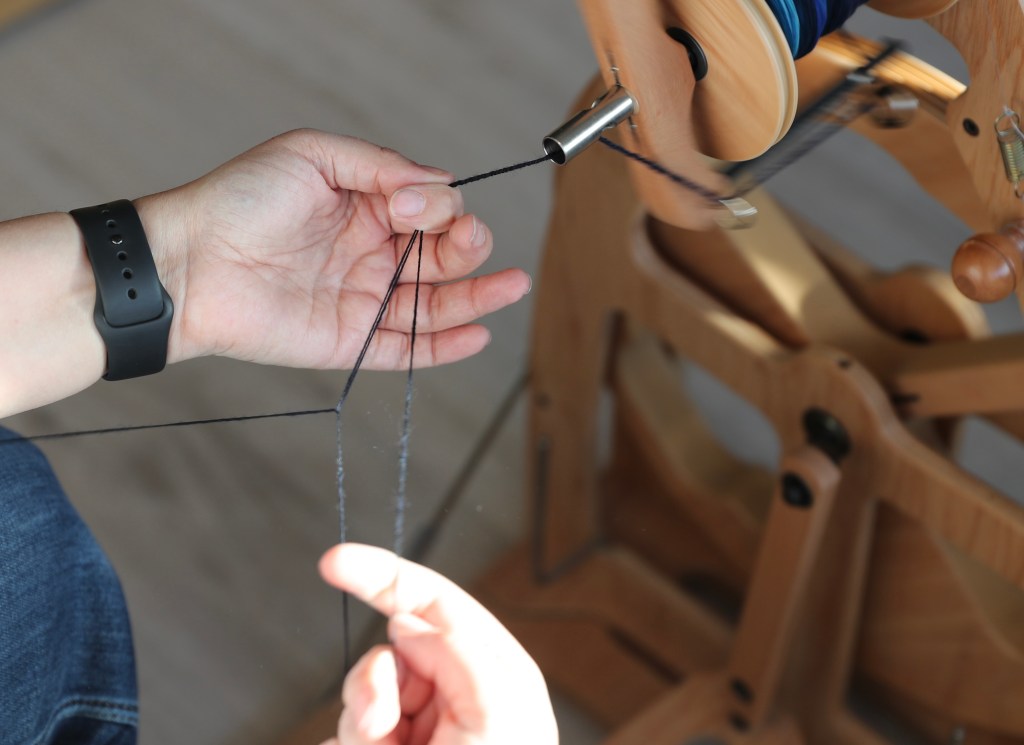

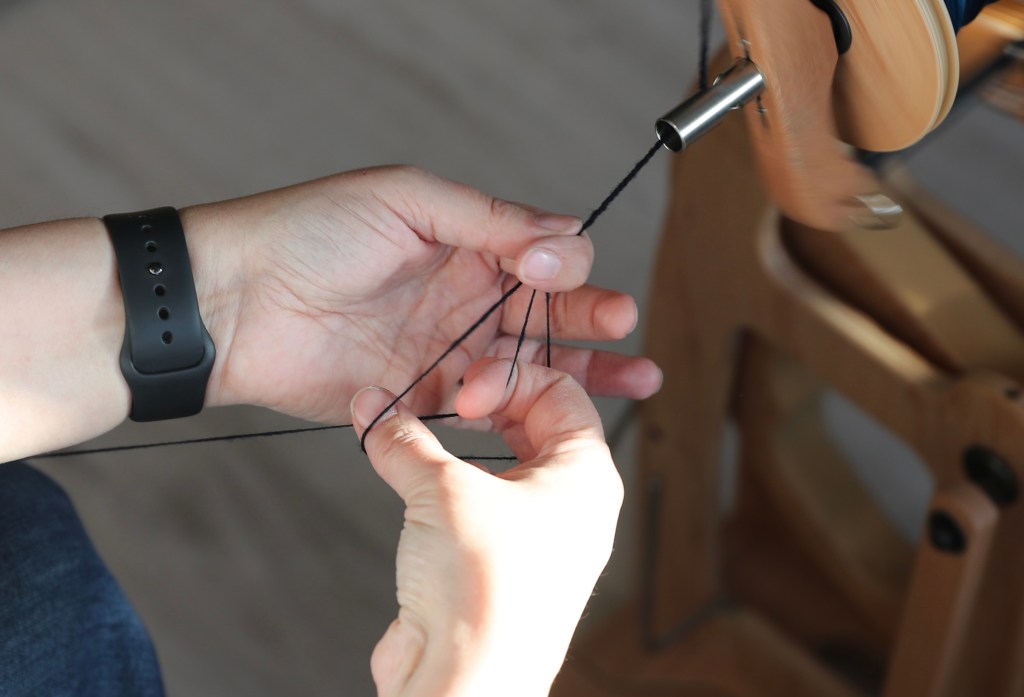
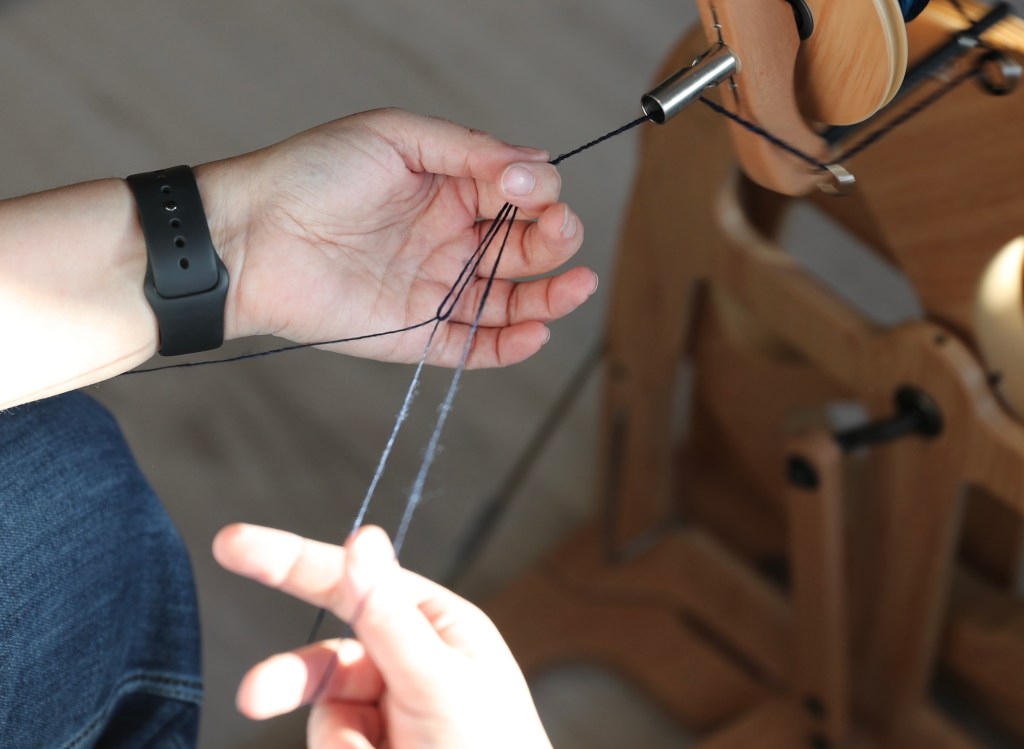
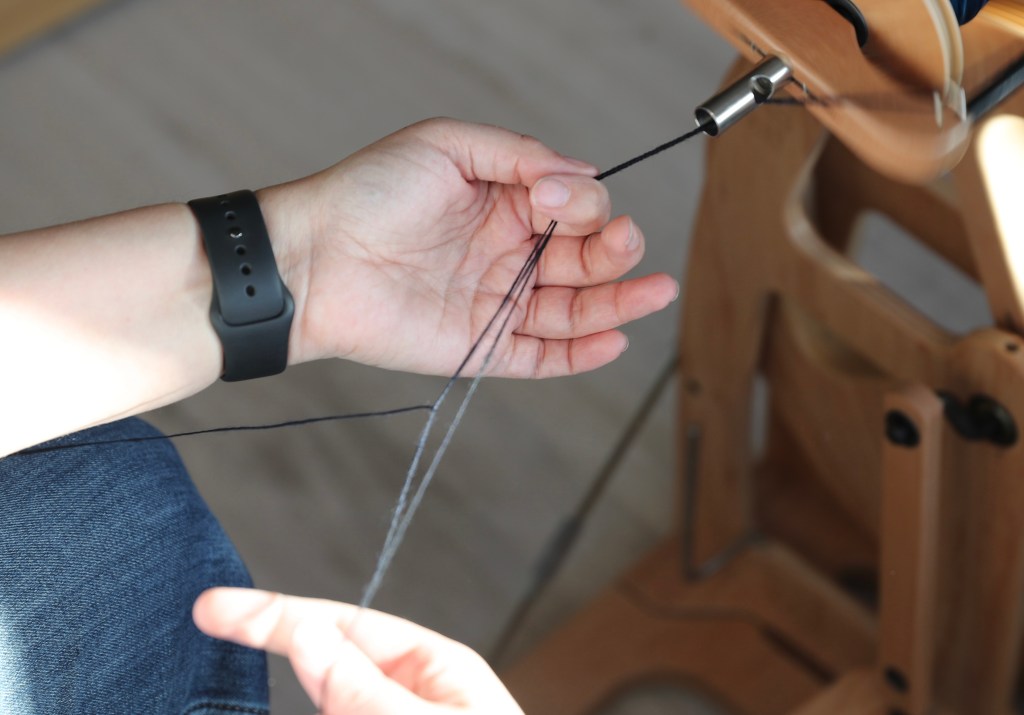
This technique produces a triple-plied yarn, and the sequence of colours gets preserved, as the different sections are always plied with each other. Another advantage is, that this technique allows you to ply the entire thread, without leaving any leftover yarn. I hoped that the triple-ply structure would lead to higher durability.
The resulting yarn looked promising, waiting to be turned into socks.
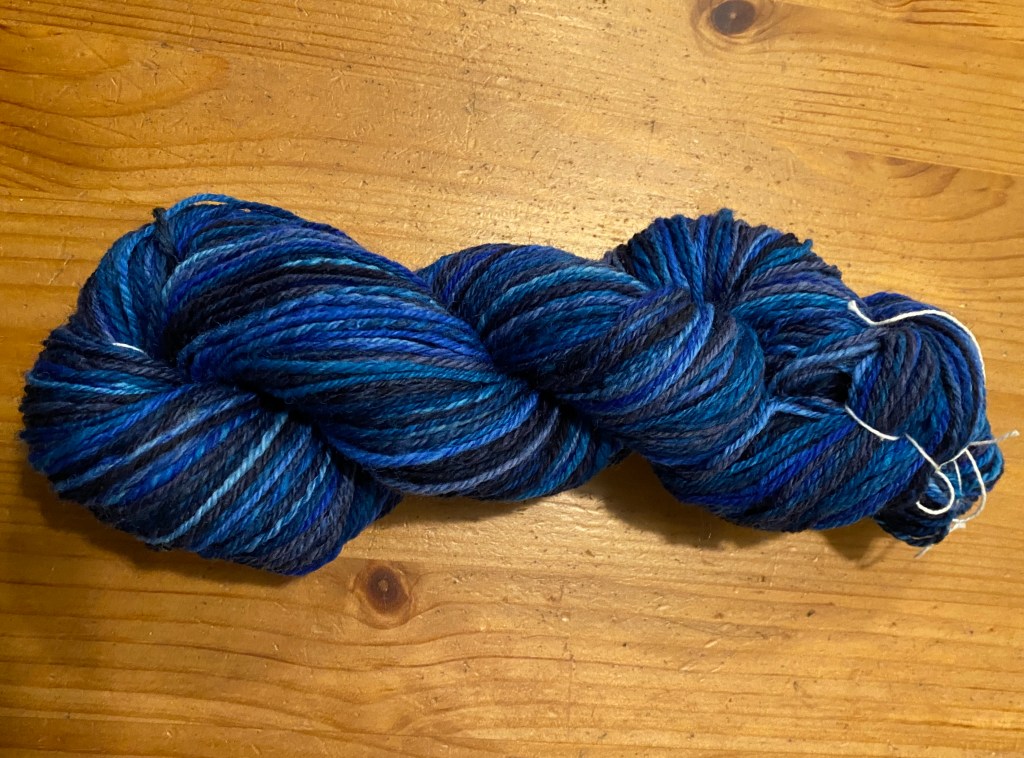
I selected the pattern “Flechtwerk” from Manuela Burkhardt’s book. As mentioned above, it proved to be quite a challenge. I just couldn’t memorise the pattern. Sadly the grid pattern that this pattern was supposed to produce didn’t show quite as planned with my chosen yarn.

The first sock taught me to not skimp on the number of stitches. It turned out too small, and I can barely pull it over my foot. I can’t imagine that helping the durability of the yarn. Therefore I increased the number of stitches for the second sock.
I really love how the Navajo yarn preserved the coloured sections of the yarn. The colours appear more like stripes than a blend of colours. I assume this effect might look interesting if different colours are used.
Possibly something to try in the next experiment.
By now the season for warm socks has passed. Seeing the results of this experiment will have to wait until winter. But maybe the number of contestants will have increased by then.


 Snathanna