trial and error in Lace
When I came across A Weaver’s Book of 8-Shaft Patterns, I couldn’t resist. You can never have too many patterns to choose from. While leafing through the book, one chapter in particular caught my attention. Huck and Huck Lace. The patterns looked interesting and I was itching to try them.
So what is lace? The Cambridge Dictionary defines it as ” delicate net-like decorative fabric made with fine threads.” And it was the grid-like patterns that caught my attention. In Huck Lace, the grid is created by “floating” weft and warp threads over others, while the structure is held together by so-called “tabby” threads, plain weave wefts between each pattern weft.
The idea is, that the pattern is created by the weave structure, while weft and warp are the same material. We’ll see how well that worked later on.
In developing this project, I went through the patterns in the book and discovered that a number of them worked with the same threading sequence, the only change being in the treading and tie-up. I made a list and found seven patterns that I could weave on the same warp with the threading in place.
The book specifically mentions the use for towels and dish towels are something I like playing around with. I decided to do a trial run.
Based on some previous projects, I set the aimed for size at 40×60 cm. At some point I had calculated a shrinkage of 18%, so setting the loom width at 50 cm promised a decent result. I had used a sett of 8 threads per cm on previous projects, so I settled on that. To have enough room for experiments I chose a warp length of 10 m. That decision would have me cursing later on.
I had some white cotton/linen yarn sitting around which was the ideal candidate for this experiment.
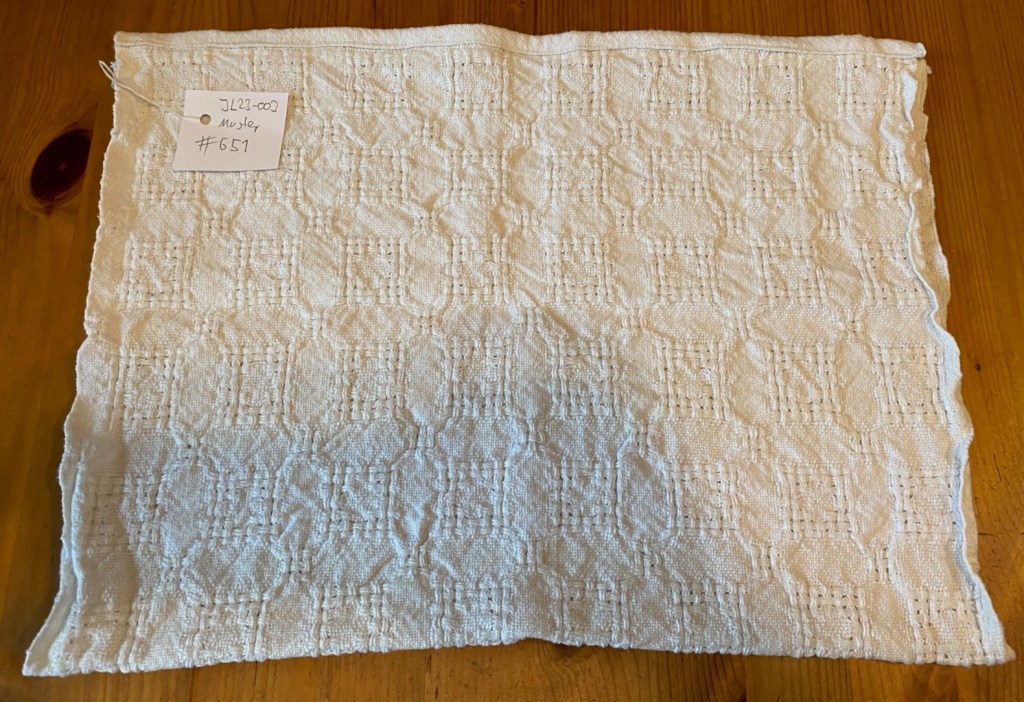
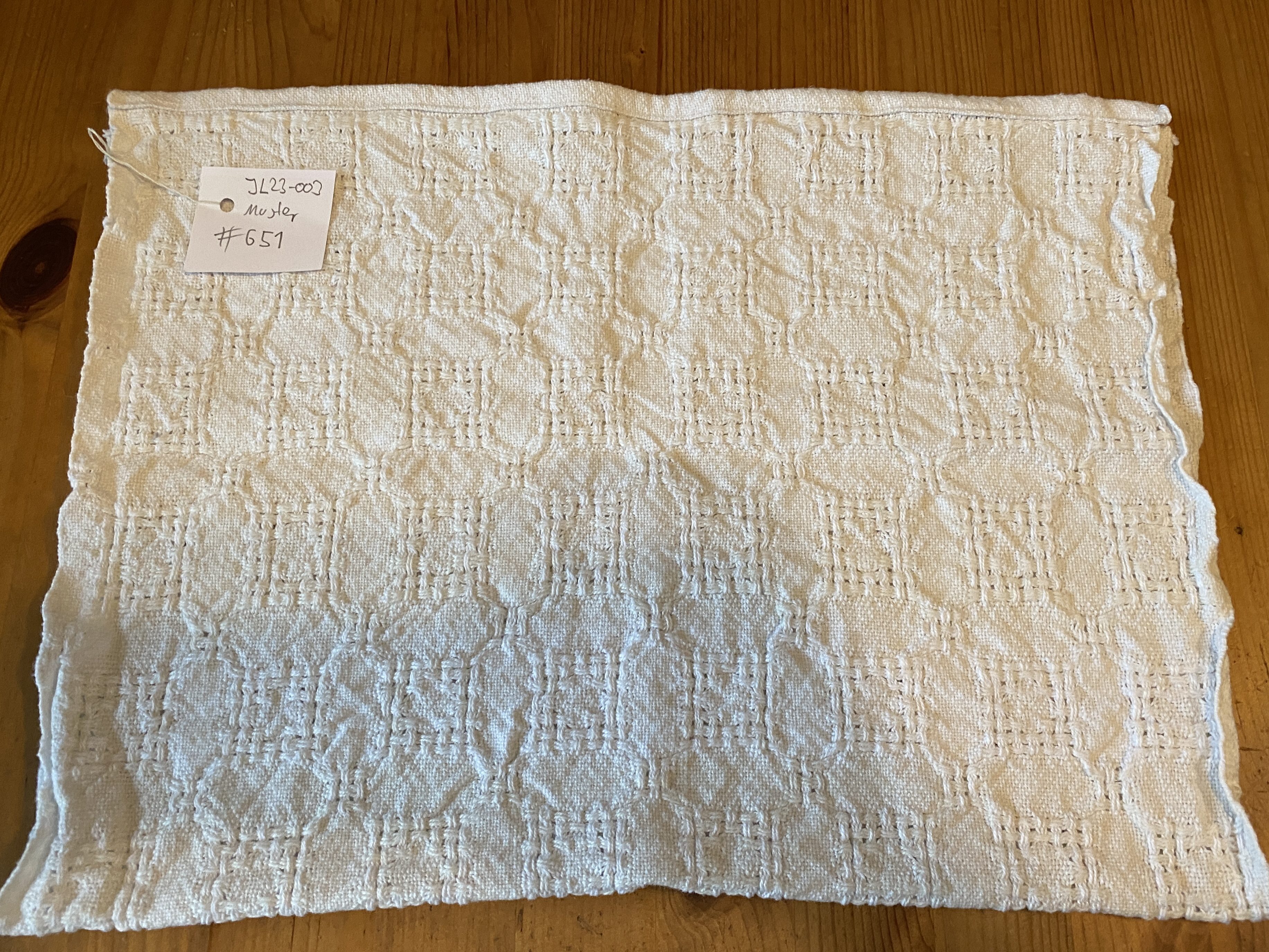
After setting up the loom I started with pattern #650 and wove to a length of 70 cm. The pattern looked nice on the loom, but just to be sure I wasn’t messing up anything I took it off after finishing to see what it would look like after washing.
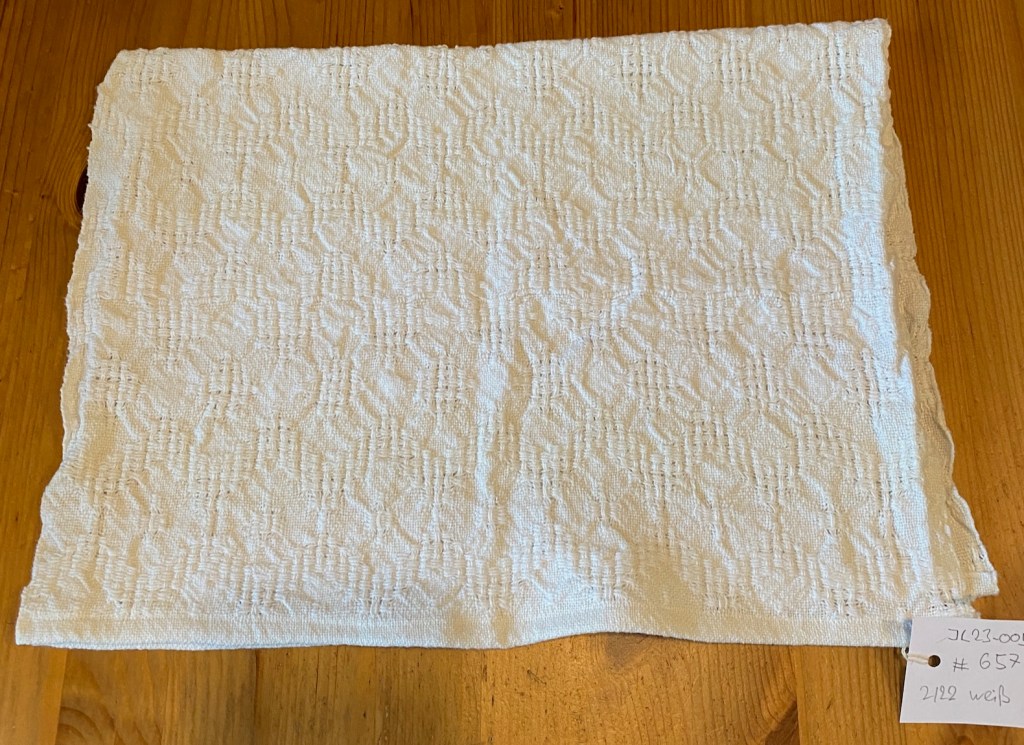
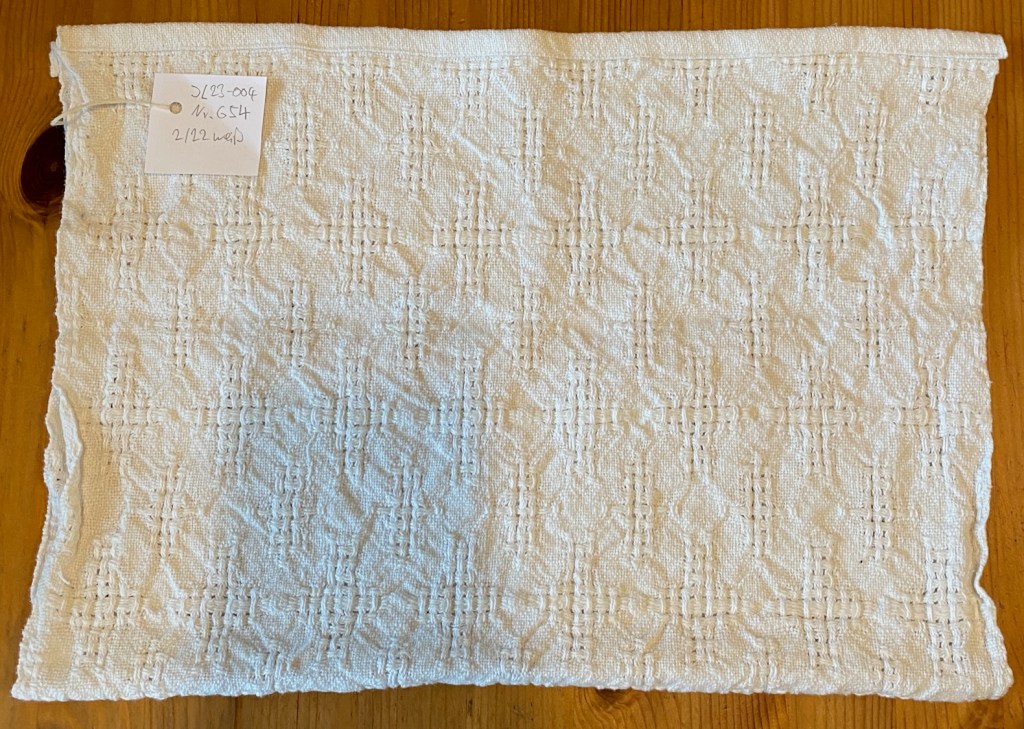
To my disappointment, the pattern had all but disappeared through shrinkage. The crumpled texture, caused by different shrinkage of the different sections, actually felt quite nice for a towel, but the look was a little disappointing.

A bit dispirited I carried on, trying different patterns. I also made some trials with thinner weft, coloured weft and alternating a natural coloured thread with a thin tabby weft. I didn’t take anything off the loom in between, which I probably should have to see the results.
I had run through most patterns, not expecting any miracles, when the fair at my kid’s school drew nearer. I had little hope of producing anything presentable from this experiment, and still had a couple of metres of warp left.
In a desperate attempt to clear the loom, I started using some leftover hand-spun yarns, hoping that the resulting fabric might be turned into some use. Afterwards, I switched to plain weave with simple weft thread, just to get the warp off the loom.

After finishing the towels, my fears were confirmed. Most patterns were barely visible, and the towels looked a little boring. To make things worse, it turned out that one spool of my yarn had some discolouration, why I don’t know. It wasn’t noticeable while working, but stood out when I looked at the fabric in daylight.
And because I hadn’t noticed the problem while weaving, all my prepared weaving spools had gone on one pile, mixing yarn from different sources throughout the project.
Looking back I should have probably checked my results in between. The towel with thinner yarn looked better than the one with the same pattern woven with the same thread as the warp. And using that would have prevented the discolouration disaster.
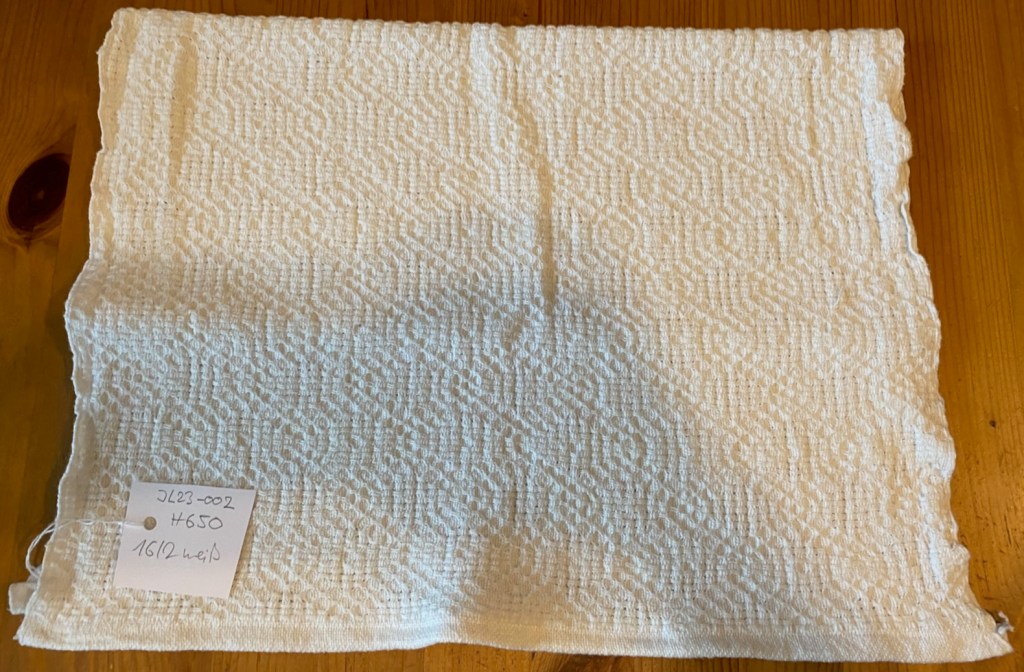
So this experiment turned into quite a learning experience. I might play around with variations at some point, but first I need to digest all that went wrong during this project.
Some pattern before…..
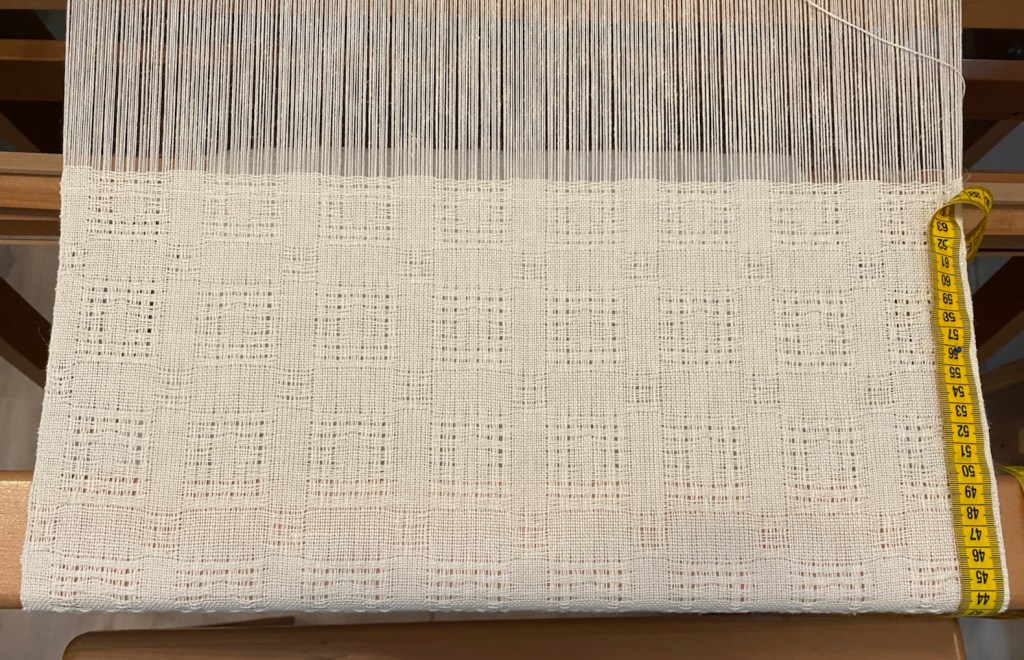
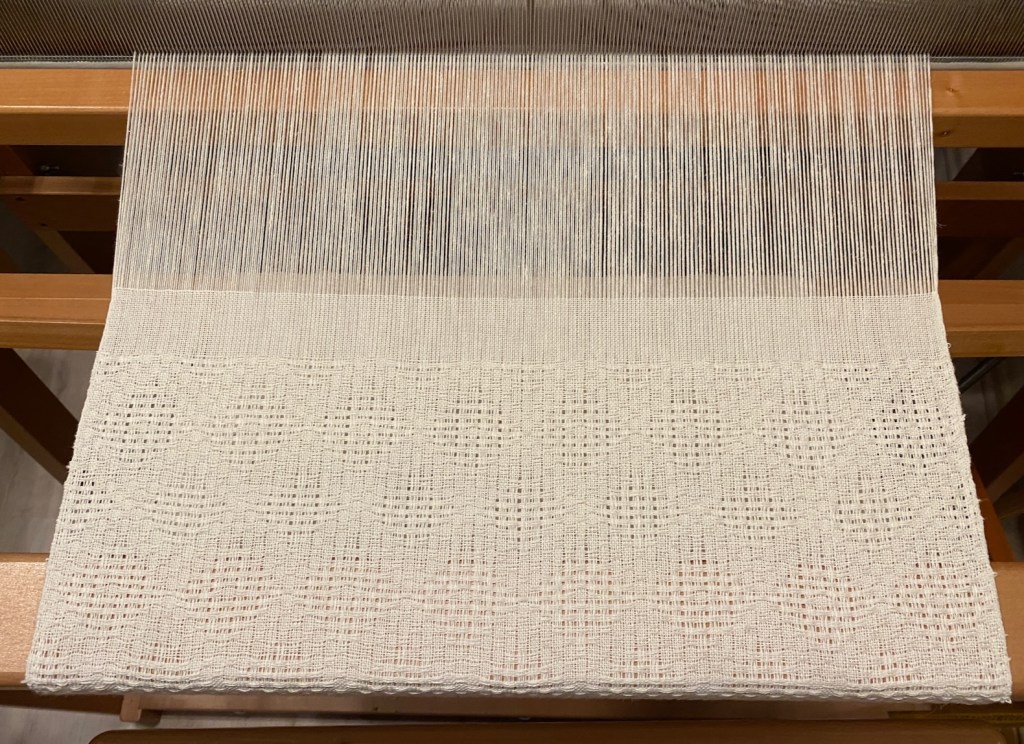
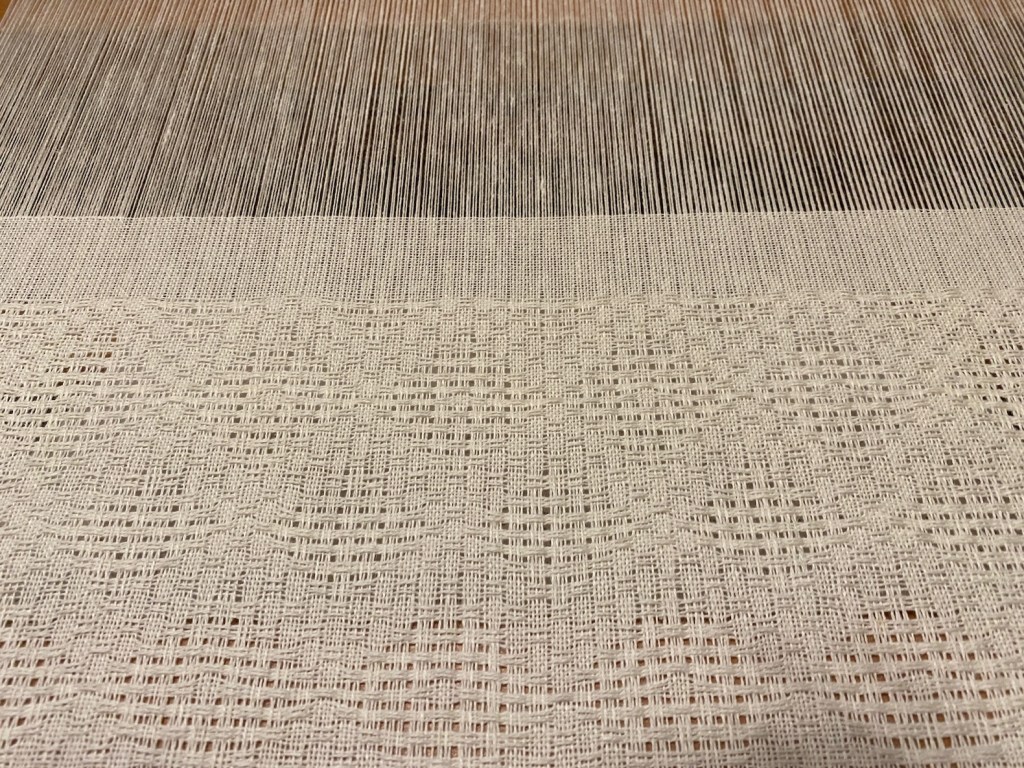
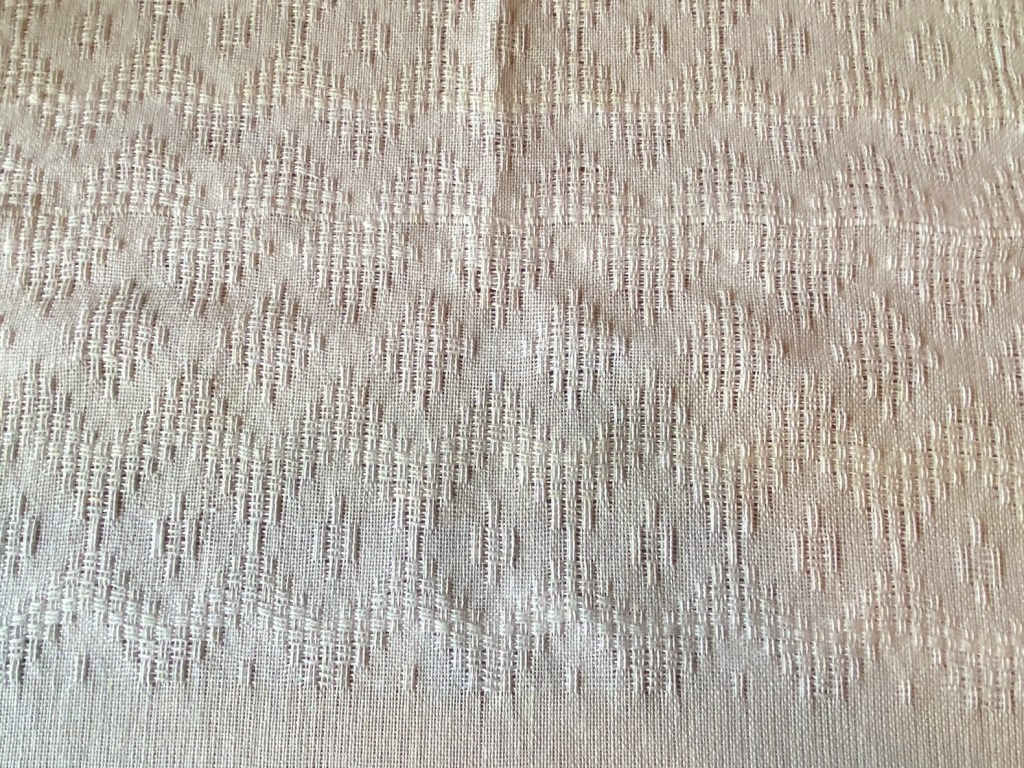
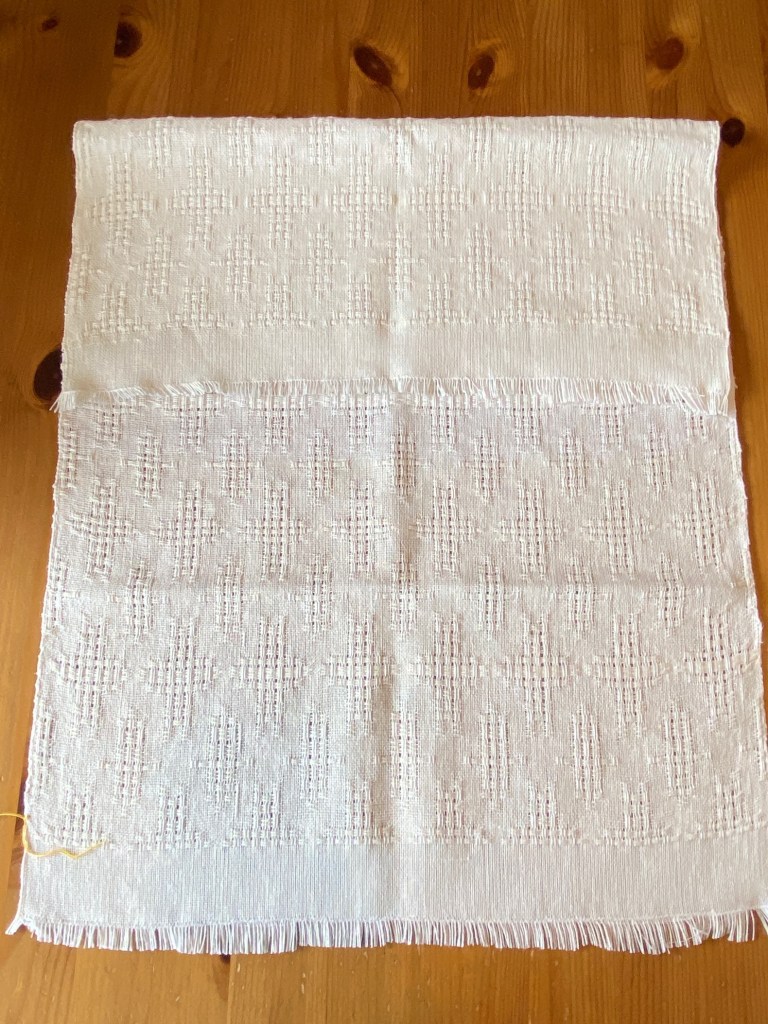
…and after washing
One redeeming part of the project turned out to be the pieces I had woven just to clear the loom. I turned them into a bag, using the plain weave parts as lining. It not only let me try my hand at sewing my hand-woven fabric but produced a more than decent result in the process.


 Snathanna