suint fermentation
Finding the best way to wash wool has been a challenge ever since I first got my hands on some raw wool. It usually involves the back-breaking process of hanging over the bathtub, to wash and rinse the wool in an old baby bathtub.
It tends to leave the bathtub in a bit of a mess.
So when I recently stumbled over the phrase suint fermentation I was intrigued. It promised to get the wool clean by soaking it in warm-ish water for about a week, organisms on the wool doing all the magic.
I found a blog post describing the process and decided to try it. I got a large trash bin for collecting rainwater and set it out in the garden. A period of constant rain had it filled within two weeks.
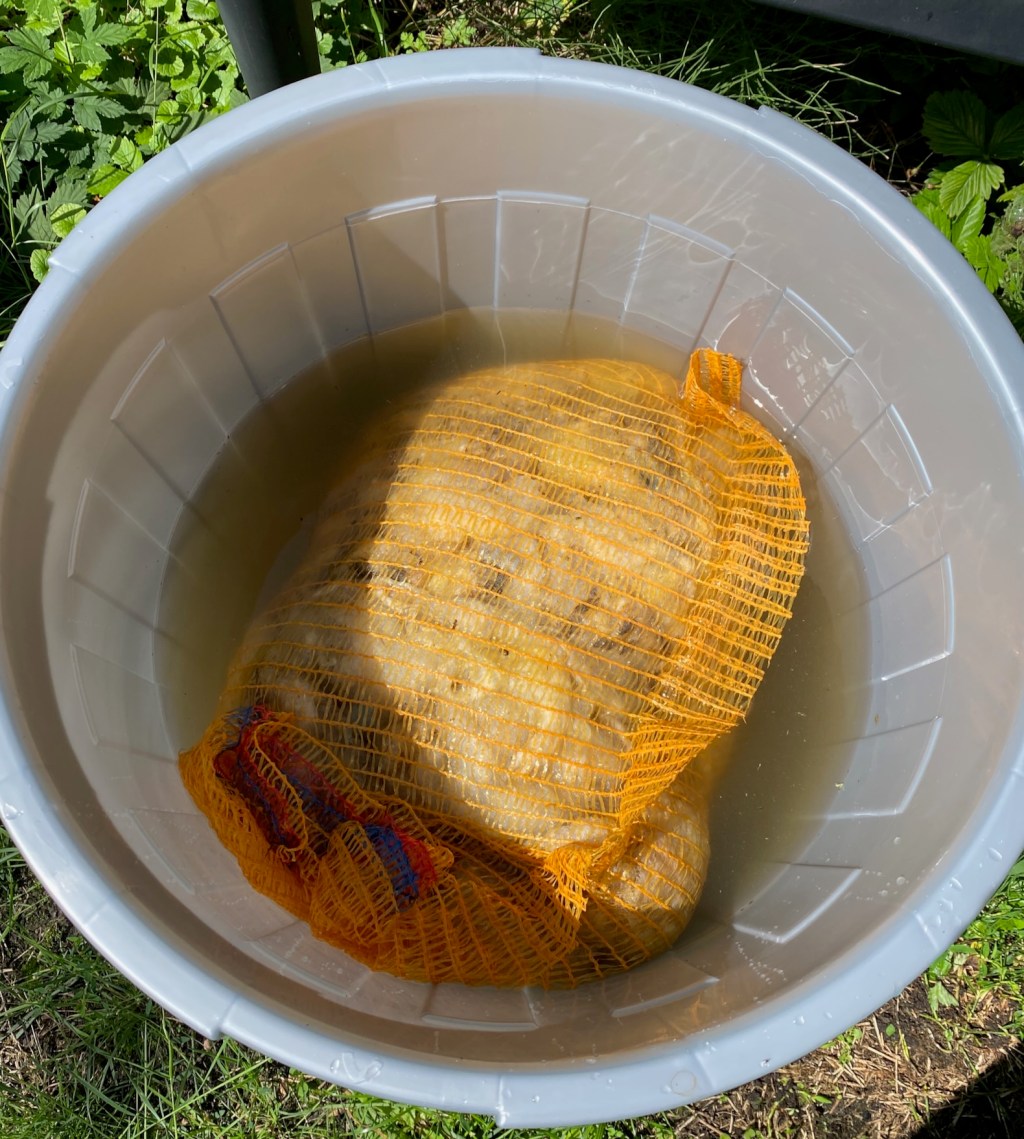
I put the wool into a mesh sack for easier handling and had to add a stone to keep it submerged in the water.

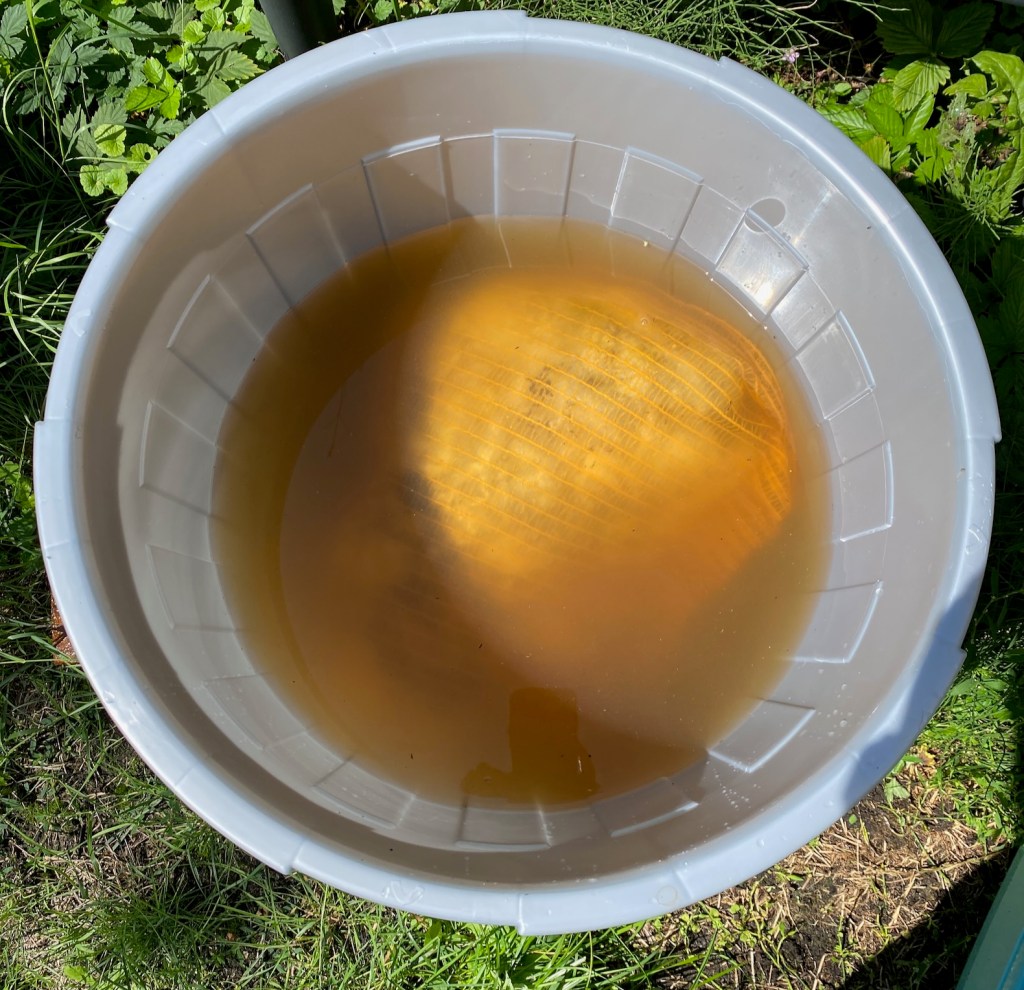
I kept checking, looking for the bubbles that were supposed to indicate that the process was working. After about 10 days, the smell reminded me of liquid manure, and some kind of layer had formed on top. Still no bubbles, but something was definitely going on.
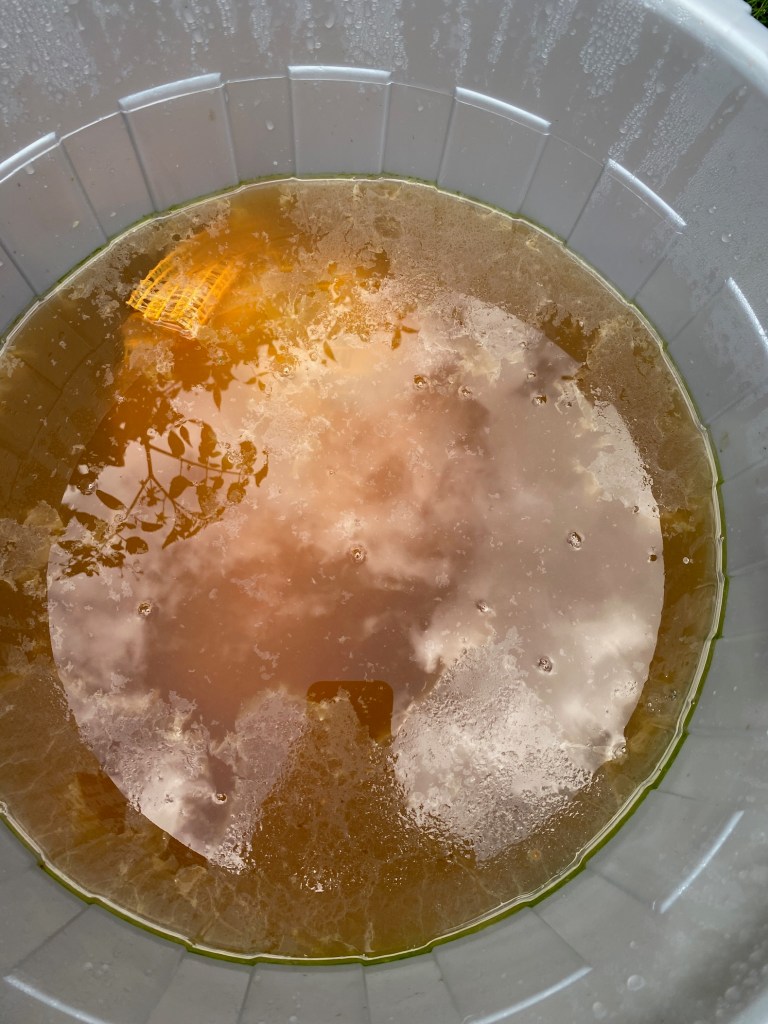
I decided to try my luck and removed the sack, rinsing it twice in clear water. The wool didn’t look particularly clean, but I had used a random batch from a sack with lots of mud and dirt on it. That often remains on the wool with other methods of cleaning.

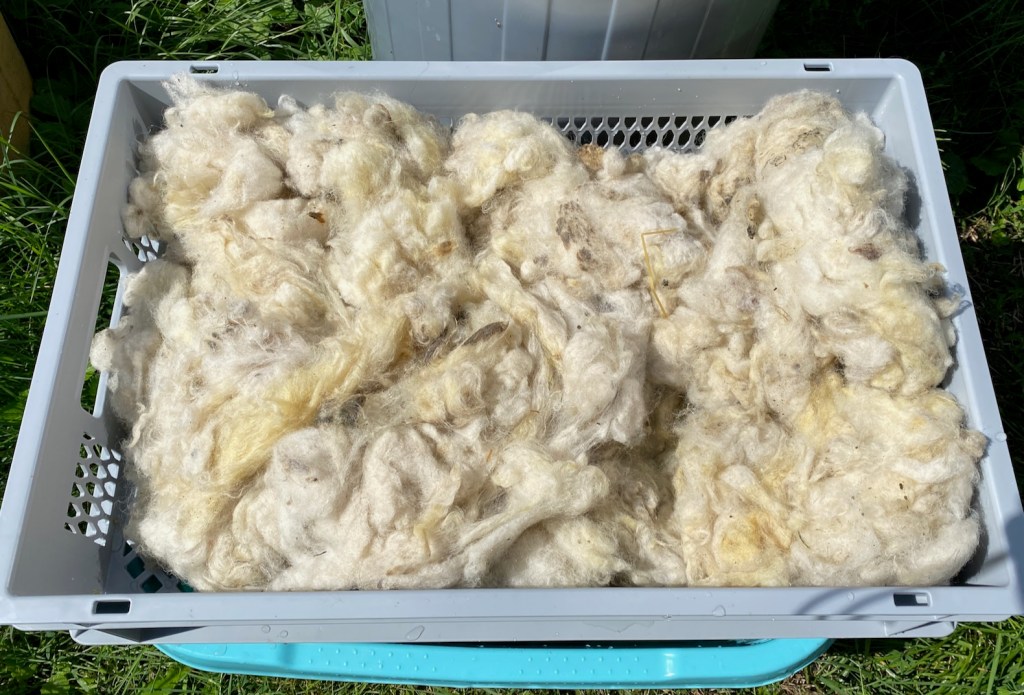
To get a better idea of how effective this method is, I decided to do a second trial, this time selecting wool with no external dirt in it.
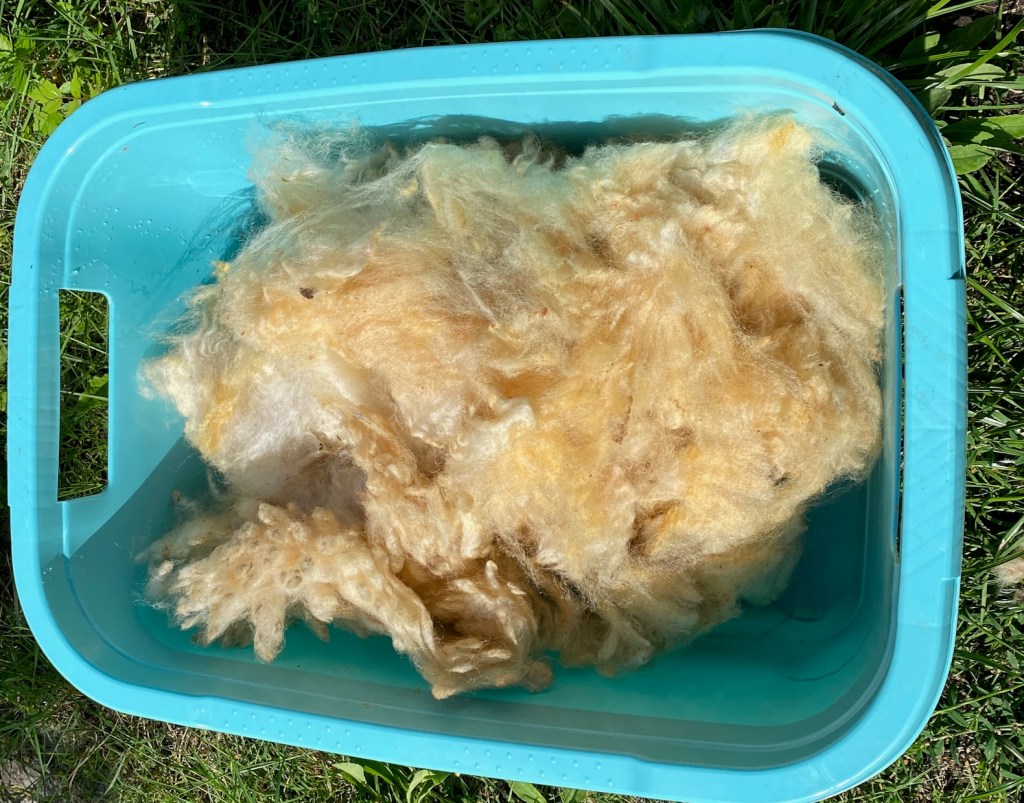
The suint bath is supposed to get more effective with every run though, so I just added water to my current batch to give the wool more room to submerge. It feels counterintuitive to dunk your wool in this not-so-pleasantly smelling brew to get it clean, but should it prove effective, I’ll not be inclined to argue with nature.


Once both batches of wool were dry, I started the process of processing it. The second batch looks promising, giving me locks that I can brush out with the flick carder. It is grease-free and looks ready to use once brushed out. I’ll probably give it another wash though, before spinning.
The first batch still has a lot of vegetable matter and mud sticking to it. It will take some time and patience to turn it into usable wool.
But, to sum up, I can definitely say that this method at least gets the wool as clean as my previous attempts, and saves some time, effort and washing soda, so I’ll probably continue using it.

 Snathanna