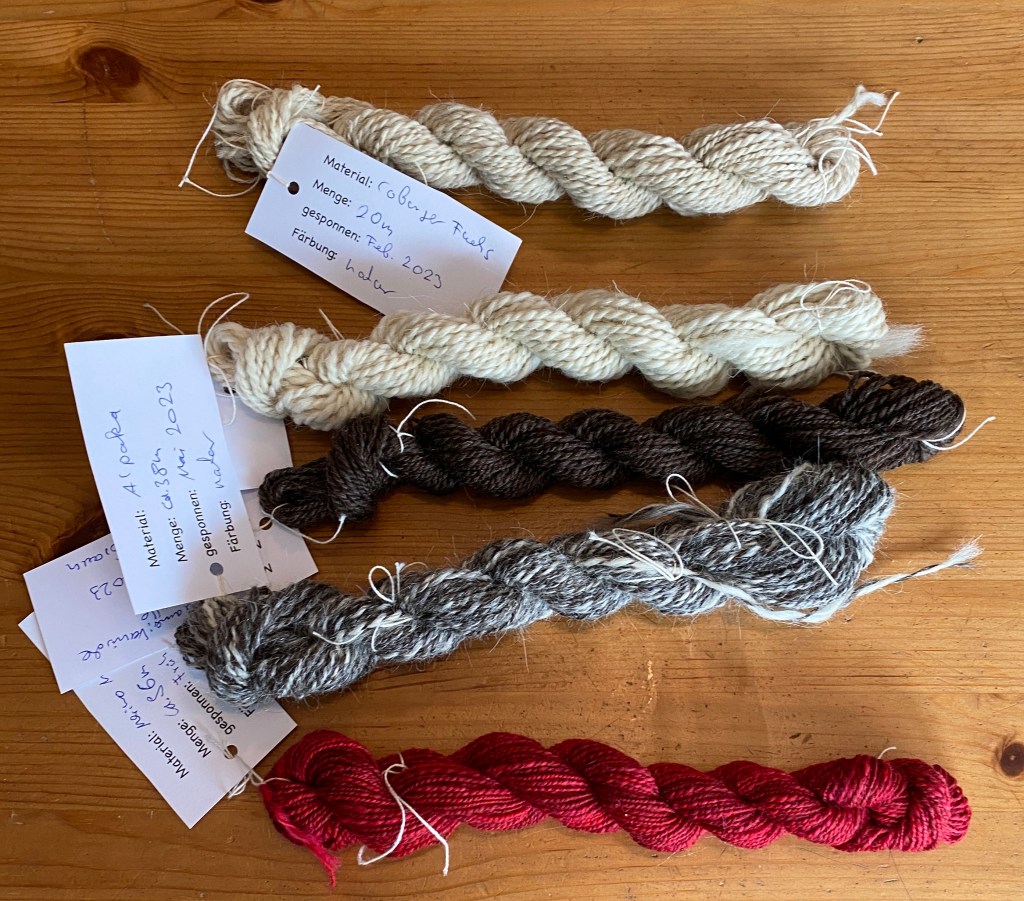
Advent Calendar Part 2
The year has barely started, and before you can blink it’s mid May and your Advent Calendar fibres still sit unspun in their box. Hight time to give chase and work on remedying that situation.
2022-03 Coburg Fox:
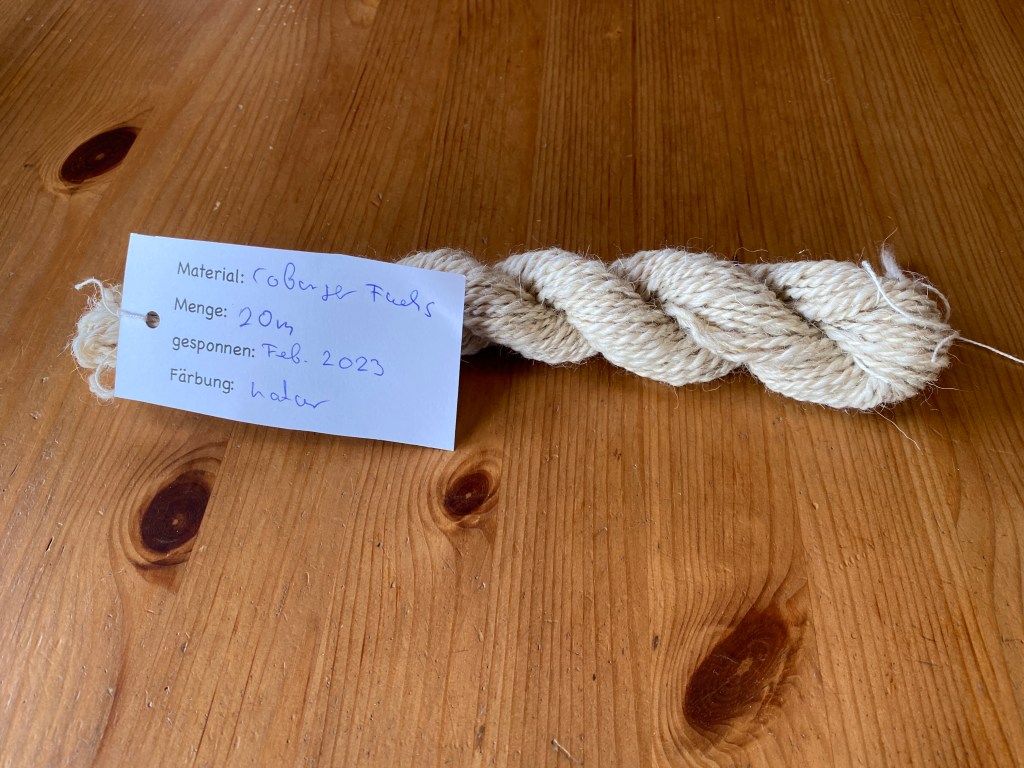
I had come across Coburg Fox before, so this wasn’t a totally new experience for me. With this fibre, you get reddish hairs mixed in with the mostly beige wool.
The result is interesting colourwise, but the hair sticking out of the finished yarn makes it a bit scratchy. Therefore I cannot recommend this fibre for anything worn directly on your skin.
2022-04 Tencel

My first thought upon taking this fibre out of its bag was silk. But checking the calendar list revealed it to be Tencel. Some further research taught me that Tencel is a fibre which is industrially produced from cellulose.
Since I prefer working with natural fibres, this was something I had heard about, but never put much thought to it. Looking at the material brought me to the conclusion that it would be better suited to being used mixed with something else. Since I don’t have the means for conducting such an experiment at the moment, I’ll leave this fibre to be used at a later date.
2022-05 Scandinavian Mountain Wool
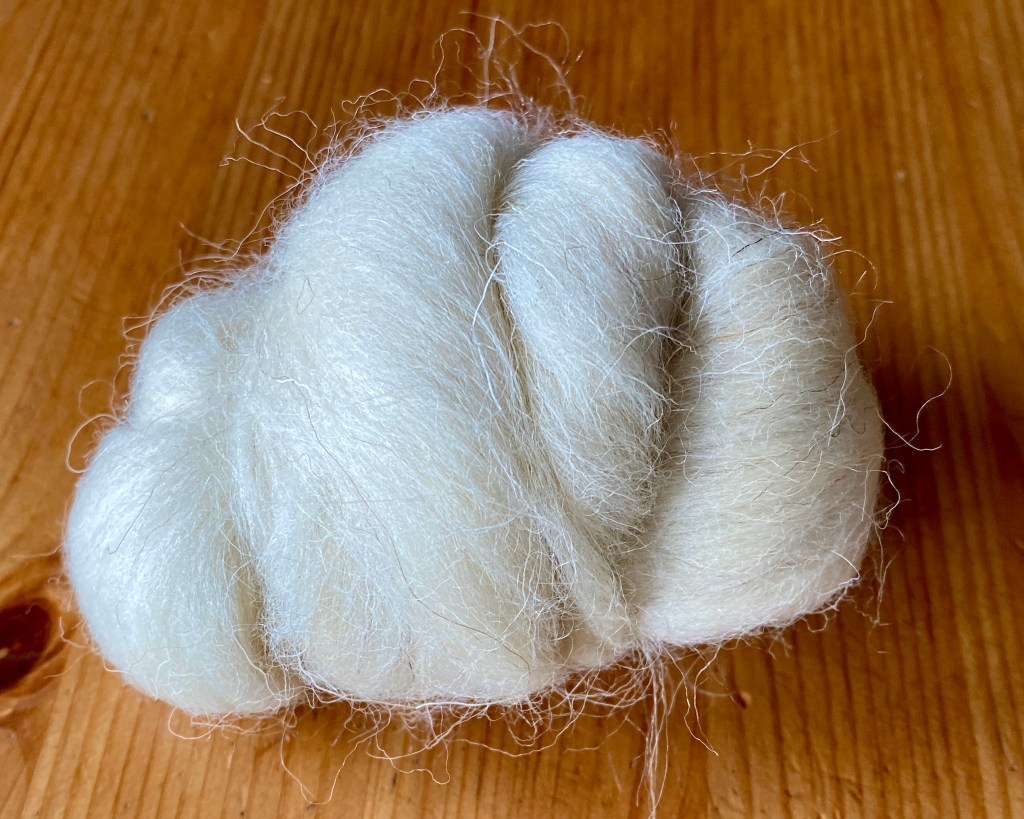

I liked the colour of this fibre from the start. I like natural colours with a unique charm. This one was naturally creme-coloured and immediately caught my eye.
But I also noticed hairs sticking out of the fibre right away. It was clear that this material was not suited for fine spinning.
I tried my best to spin a fluffy yarn, which tuned out surprisingly well. It yielded a yarn that looked nice, but once again would work for anything worn on your skin.
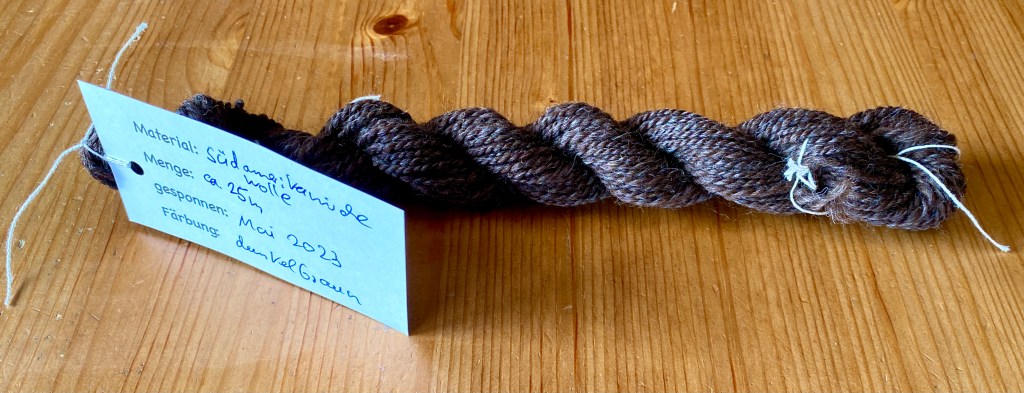
2022-06 South American Wool

I liked this wool right from the start. A nice, naturally brown colour with charm and fine fibres. This seemed promising.
That impression got confirmed during spinning. The fibre was easy to spin and yielded a nice, even yarn with only a few hairs sticking out.
I still wouldn’t recommend it for scarves and the like, but I am sure it will work well for knitting animals.
2022-07 & 2022-14 Alpaca white and natural brown
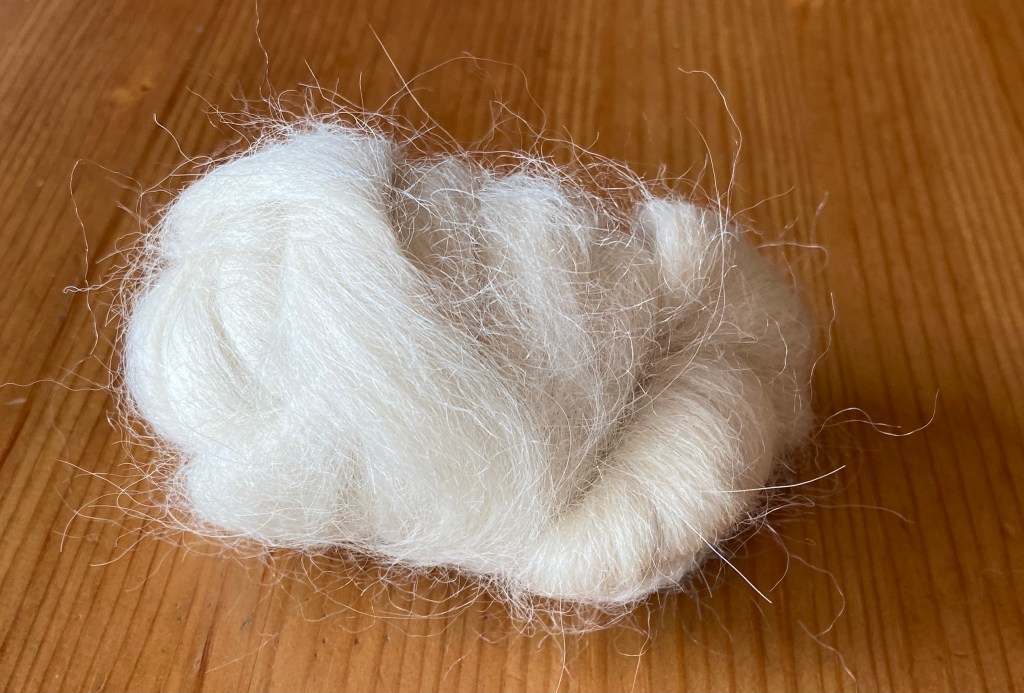

Looking at my list, I realised that both Nr.7 and Nr. 14 were Alpaca. That sparked the idea of using them blended together. Interestingly, a brief glance at the fibre revealed that they were quite different.
The white sample (Nr.7) consisted of longer, thicker fibres than the brown (Nr.14). That difference was quite noticeable while carding. The white fibres stuck to the drum carder a lot more.
I fed both fibres into the drum carder randomly, to get a consistent blend without having it too evenly mixed. The result was a batt where the different colours were still distinguishable.

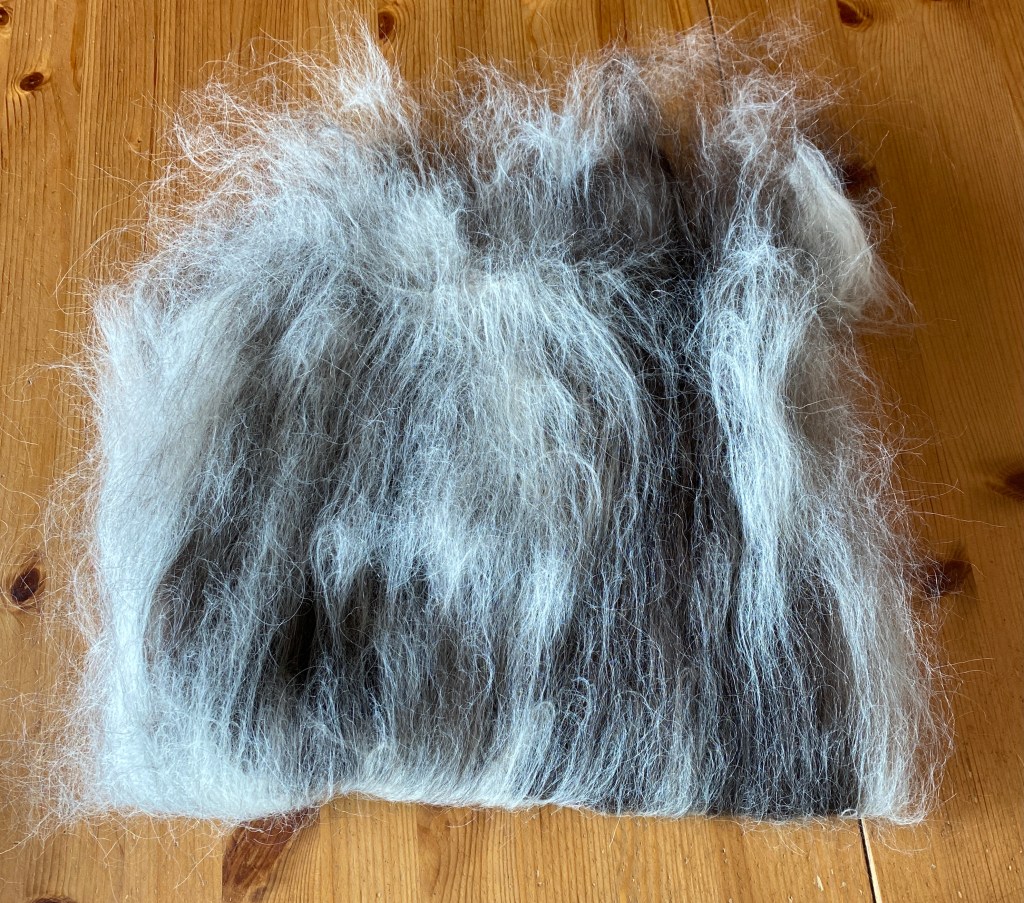
Spinning proved quite a challenge. I am not sure if it was due to the carding process, or because of the nature of the fibre, but I was completely covered in hairs every time.
The difference between the two different fibre sources was clearly noticeable during drafting. The white fibres drew out easily, while the brown fibres needed to be coaxed more to pull apart.
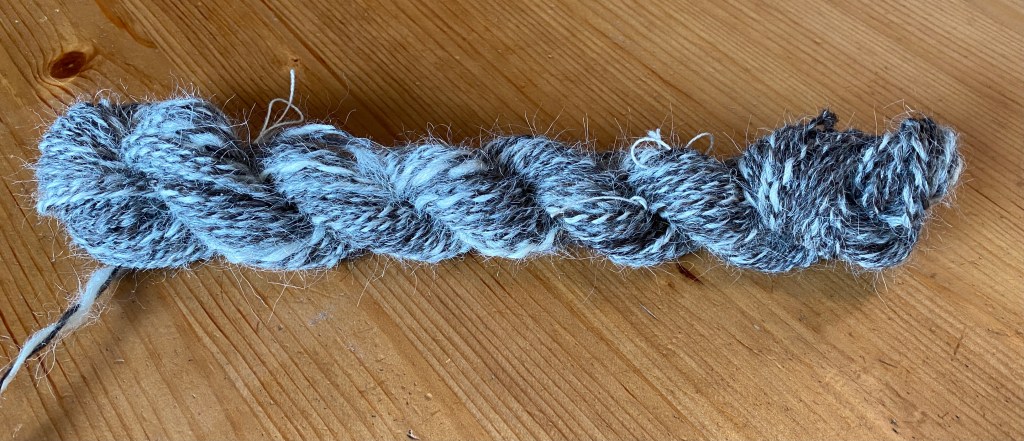
The white fibre stuck out of the finished yarn, but the yarn still proved to be astonishingly soft. I still wouldn’t recommend it for scarves and the like, but the feel is a lot smoother than the first glance suggests.
The mixed fibre yarn looked interesting, but I think especially the brown fibre might have shone more on its own.

2021-14 Merinokammzug multicolor

In closing, I’d like to give last year’s calendar some space. This time I had the pleasure of working with a Merino sliver in different shades of red.
I used the dancing Dervish again so that this sliver took quite some time to spin.
In the end, I was rewarded with a finely spun skein of soft yarn, that immediately sets your mind going, searching for a suitable project.

 Snathanna