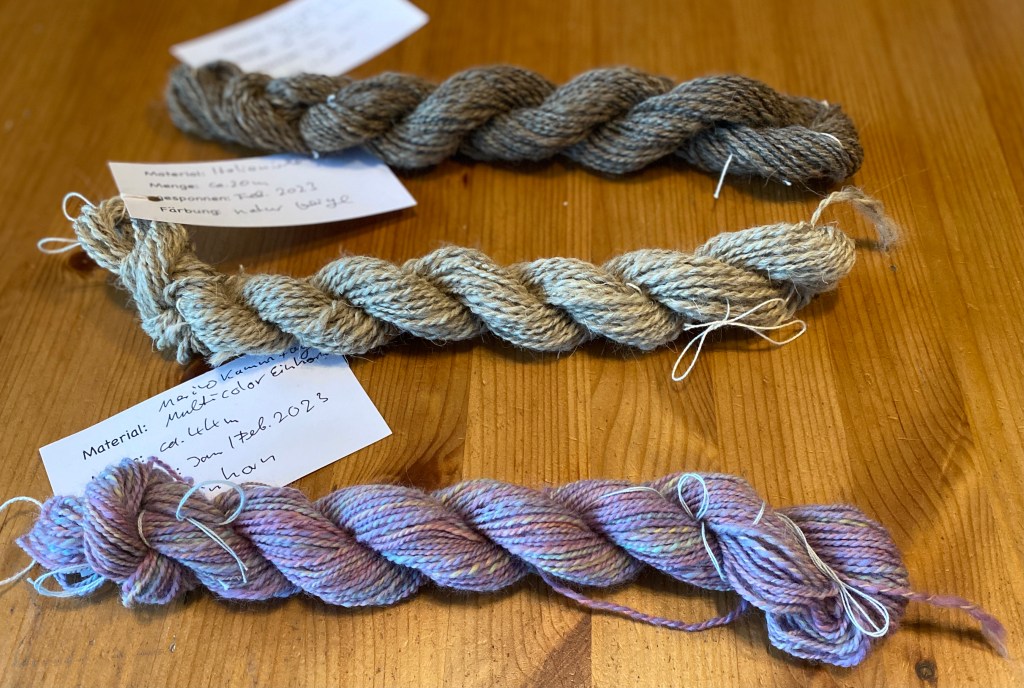
wool advent calendar part 1
For several years now, the wool advent calendar from one of my favourite suppliers, Das-Wollschaf, has been a consistent part of my pre-Christmas ritual. It not only provides the daily anticipation that comes with every advent calendar, but also gives me the opportunity to test out a range of new fibers. Often those are samples that would not have crossed my path otherwise.
But every year I encounter the same problem. The wool samples quickly disappear into their little paper bags again and languish there, waiting to be spun.
That’s exactly what happened this year (or should I say last?). By Christmas, not one single sample from the 2022 calendar had been turned into yarn. And about half the calendar from 2021 still sat unused in its box.
That prompt me to set up a mission for 2023. The intention is to spin at least two samples from 2022 and one from 2021 each month. That should see all fibre used by the end of the year.
If you study the date on this post carefully you’ll see that I got knocked off course right from the start. It took far longer than anticipated to turn the first samples into yarn. Let’s see if I can catch up over the course of the year.
But without further ado, here are January’s three candidates.
2022-01 European wool – beige-brown
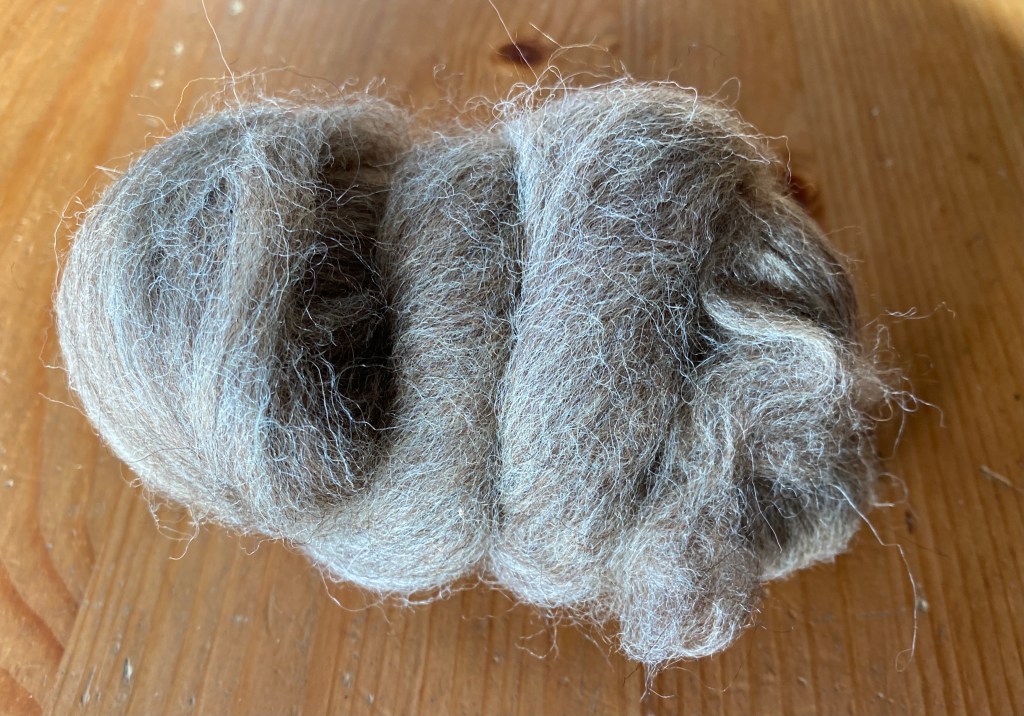
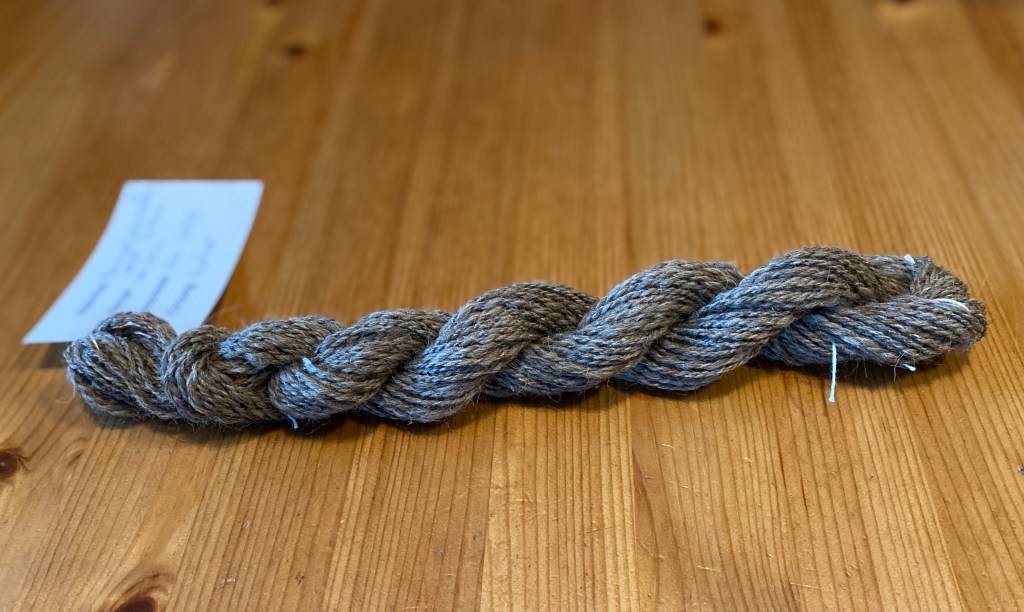
Bag number one didn’t reveal more than the European origin of the wool. I’d describe the wool as sturdy, rather than fluffy. It was easy to spin, however. I had to pick some plant matter from the sliver, but that didn’t distract too much.
I tend to spin rather thin, and true to form the singles for this turned out leaning towards fine. Plying got me a thin yarn, wich none the less should work well for knitting.
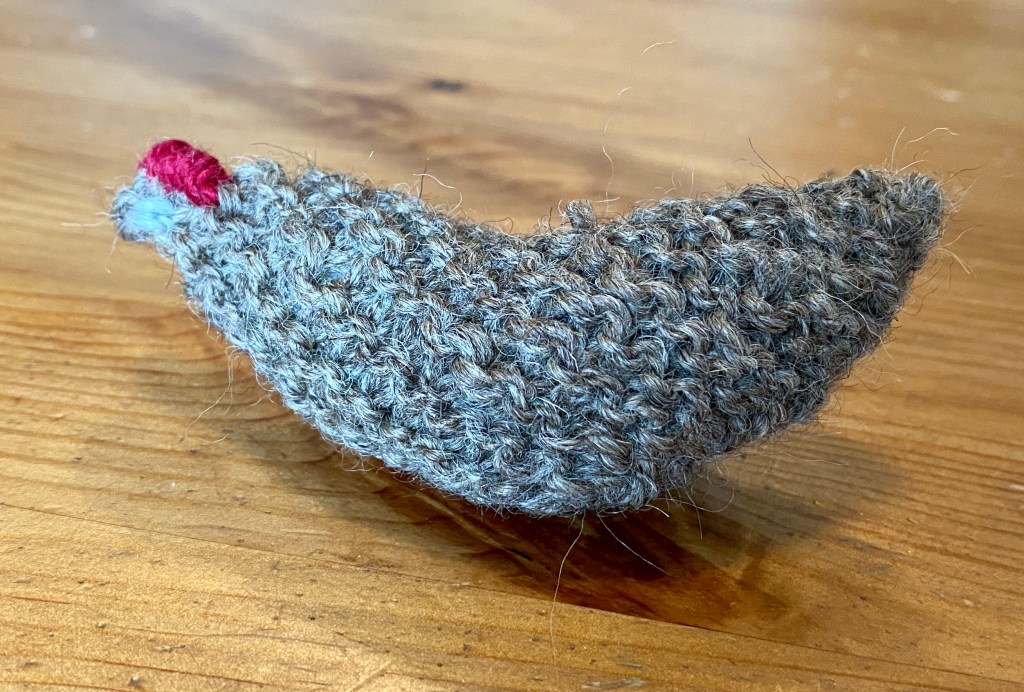
I put that to the test by making a couple of chickens. Instructions (German)
2022-02 Italien wool- beige
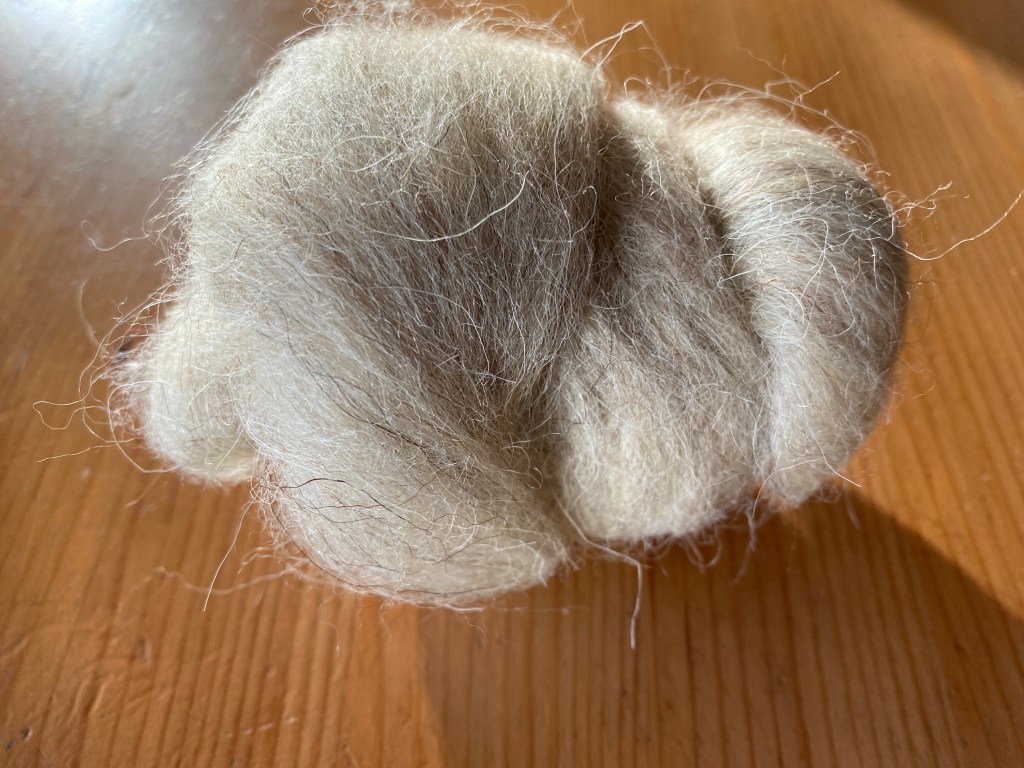

The second bag didn’t come with more description than Italian wool. I detected a couple of stiffer hairs among the fibre. From my experience, these tend to stick out of the yarn if spun straight and thin.
That led me to trying to spin a yarn with a bit more fluff this time. I chose the technique of folding the fiber over your finger while spinning so that the fibre get drawn in in a more “unruly” way.
Since spinning this way doesn’t come naturally to me, my singles turned out a little uneven. Plying smoothed that out somewhat, so that I was left with a workable yarn in the end.
No project jumped out at me for this yarn, but I am sure it will find a use at some point.
2021-13 Merino sliver “unicorn”

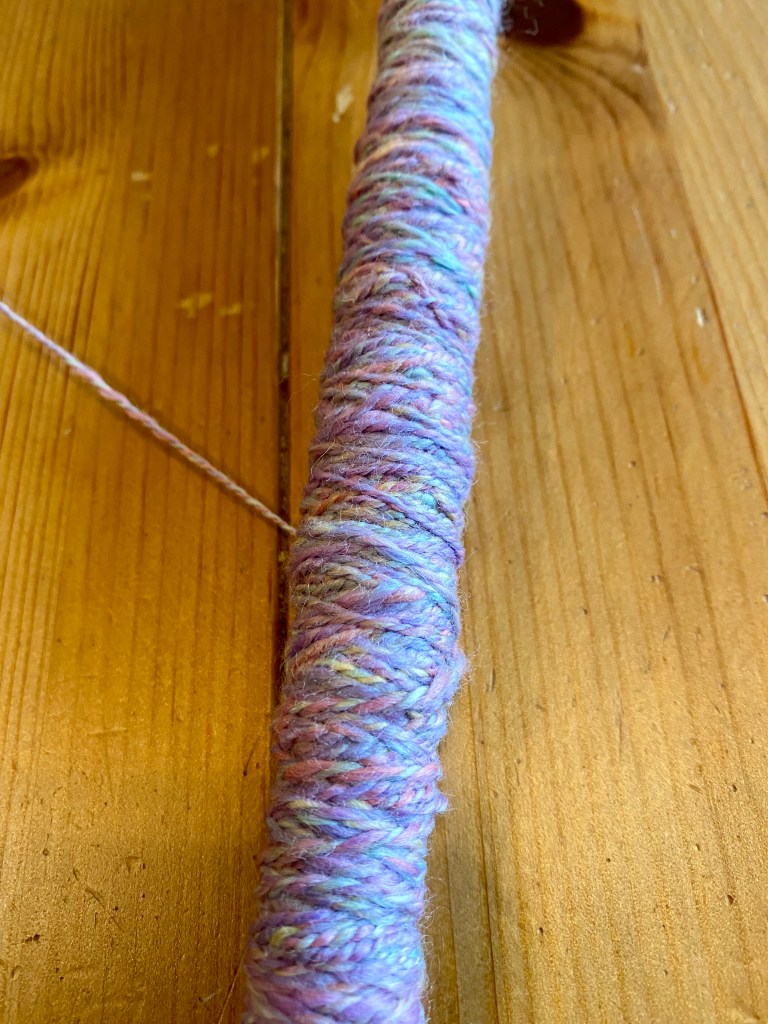
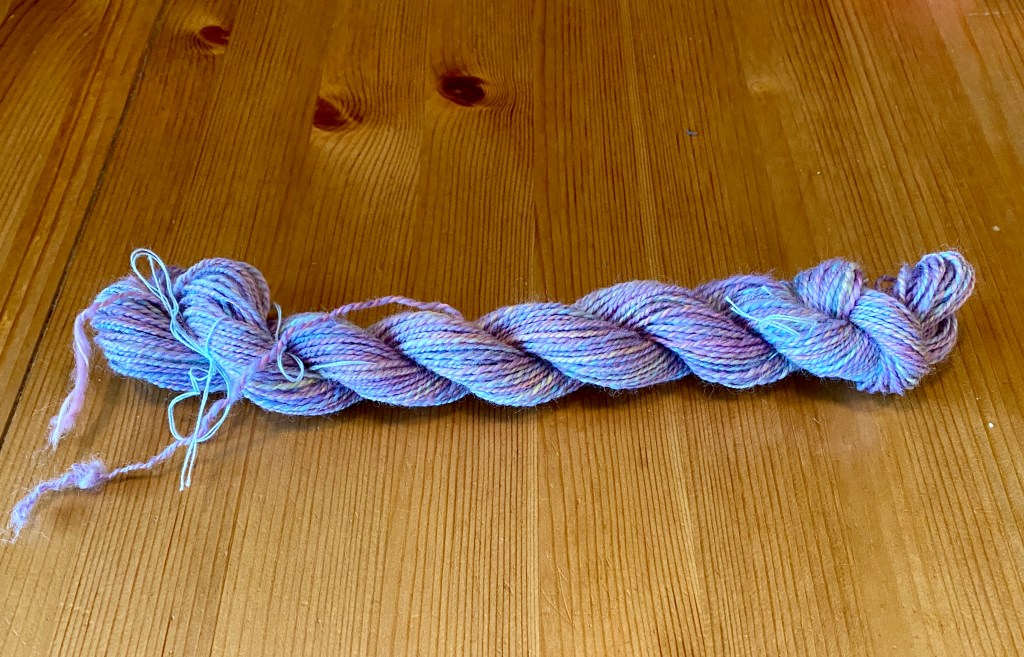
My last candidate came with the name “unicorn” attached to it. I decided to use my dancing dervish for spinning this time. I originally bought this spindle because I needed to describe spinning with a spindle supported by a small bowl for a story I was writing. It quickly turned into one of my favorite tools.
This spindle spins wonderfully thin threads. It takes a lot more time and effort compared to a spinning wheel, but it is worth it. And it is a nice way to spin in-between things, without the need for space.
Previous attempts had shown that folding the fiber over your finger is a useful technique for spinning multi coloured slivers. This way, the colours slip into the yarn in different sections without blending together too much.
My efforts were rewarded with a wonderfully fine and lively yarn. The dancing dervish will remain my tool of choice if I need a fine yarn for projects to come.
Next up, finally some weaving…..

 Snathanna