
Winter time is time for socks. Each year, as the days grow shorter and temperatures drop, I turn to my trusty wollen socks to keep my feet warm. I wear these socks over my usual cotton ones.
And each year two questions pop up during knitting. Will the yarn be enough? And how long will it take for the first holes to appear in the newly finished socks? Most times I can hardly keep up with mending sock as they crumble under use.
I decided to do an experiment to get some answers to those reoccurring questions. The simple thought behind it is to spin different yarns, knit socks and keep track of how well they perform in everyday use.
The yarn:
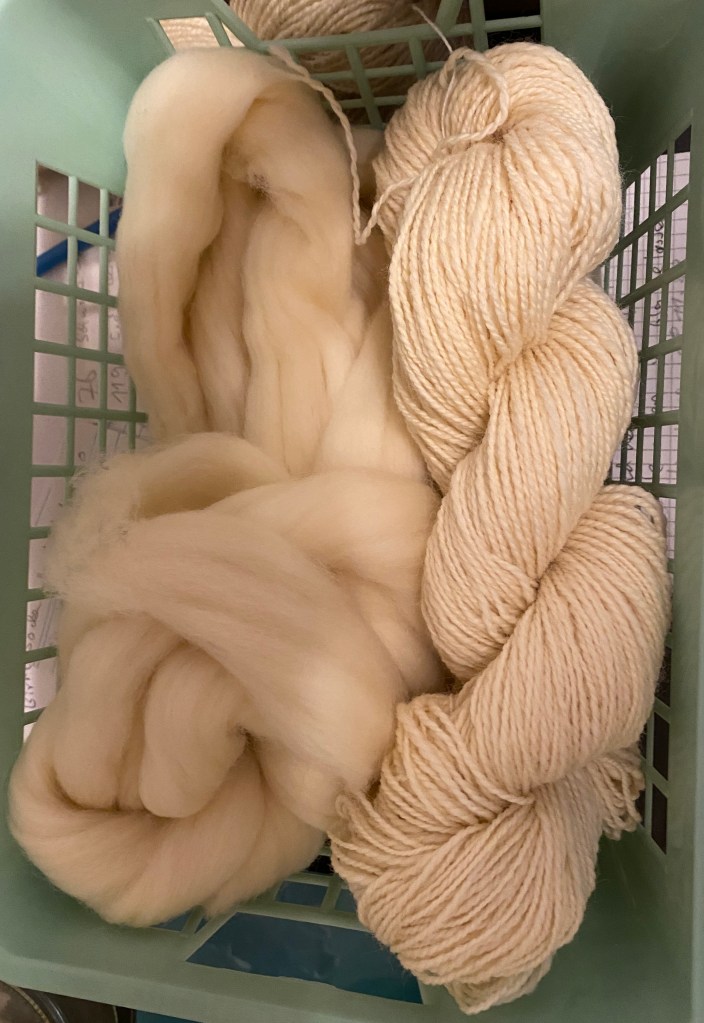
My first choice of fibre was Southern German Merino that I had bought in bulk some time ago. The name suggests a soft and fluffy fibre, ideal for scarves and the like, but in truth it’s more an all purpose fibre, which made it the ideal candidate for this project.
I planned to make two different yarns from this fibre, one as a conventional two ply, and one with a technique called Navajo plying.
I estimated that I would need about 100 g of finished yarn, so I took two skeins of approximately 50g and spun them into singles. I tried to spin them as thin as possible. I tend to spin by instinct, listening to what the fibre is telling me. The singles turned out at a measurement of about 11 wraps per cm, the finished ply at about 6 wraps per cm. It gave me about 90 g at an estimated length of 140m.
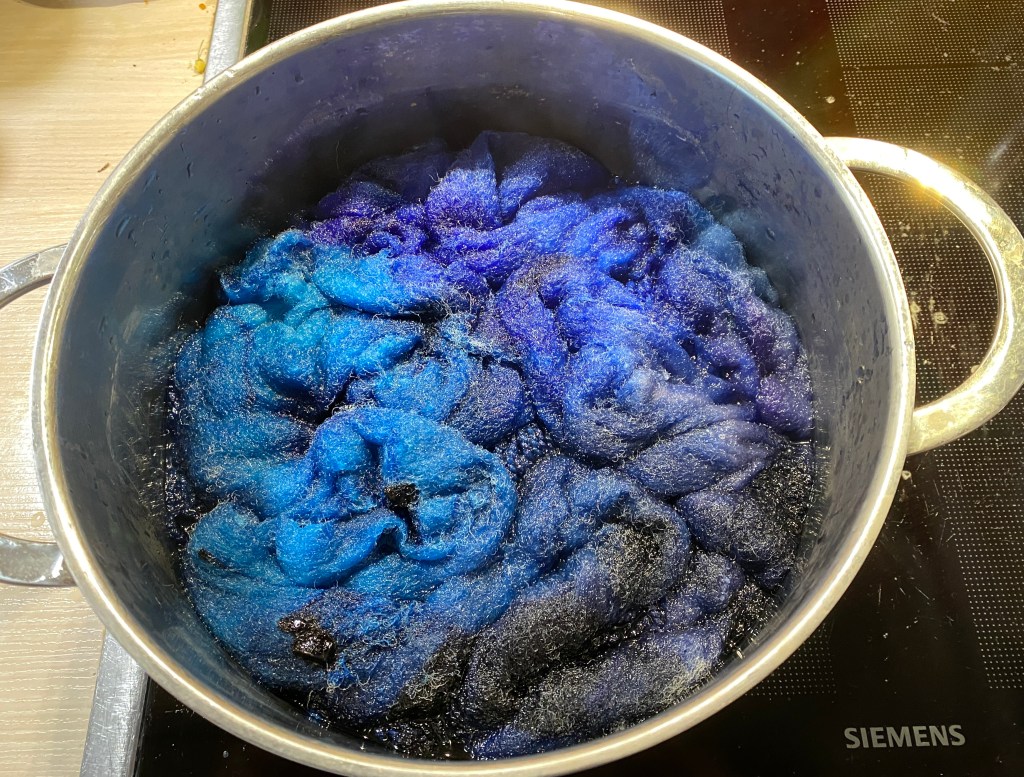
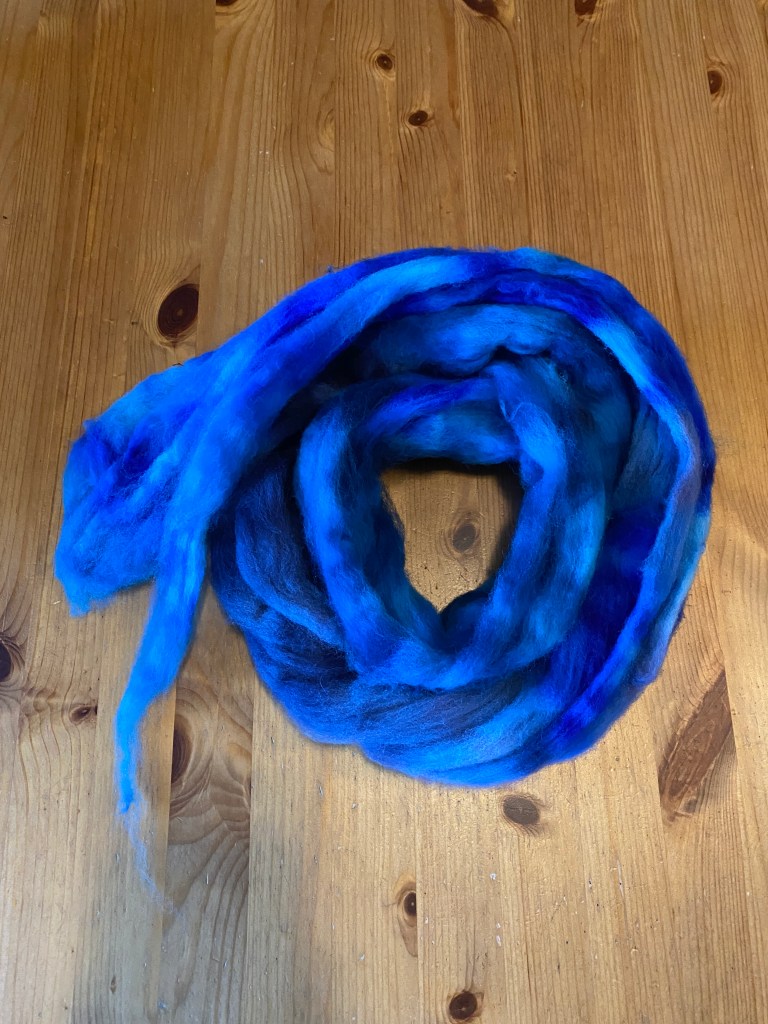
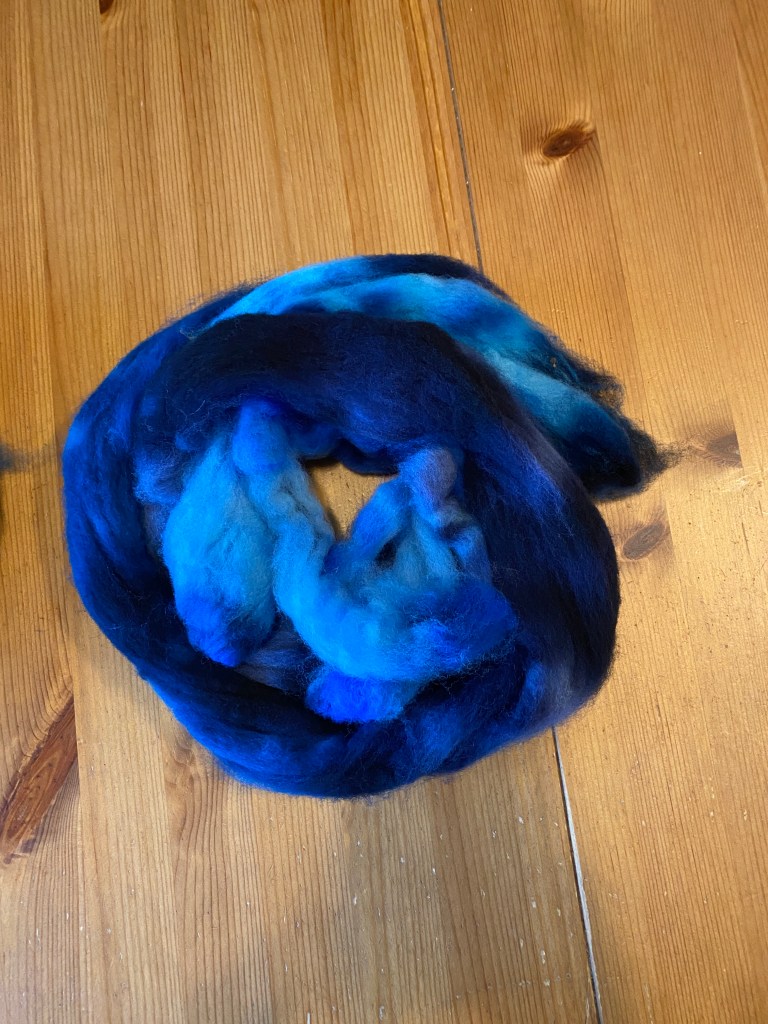
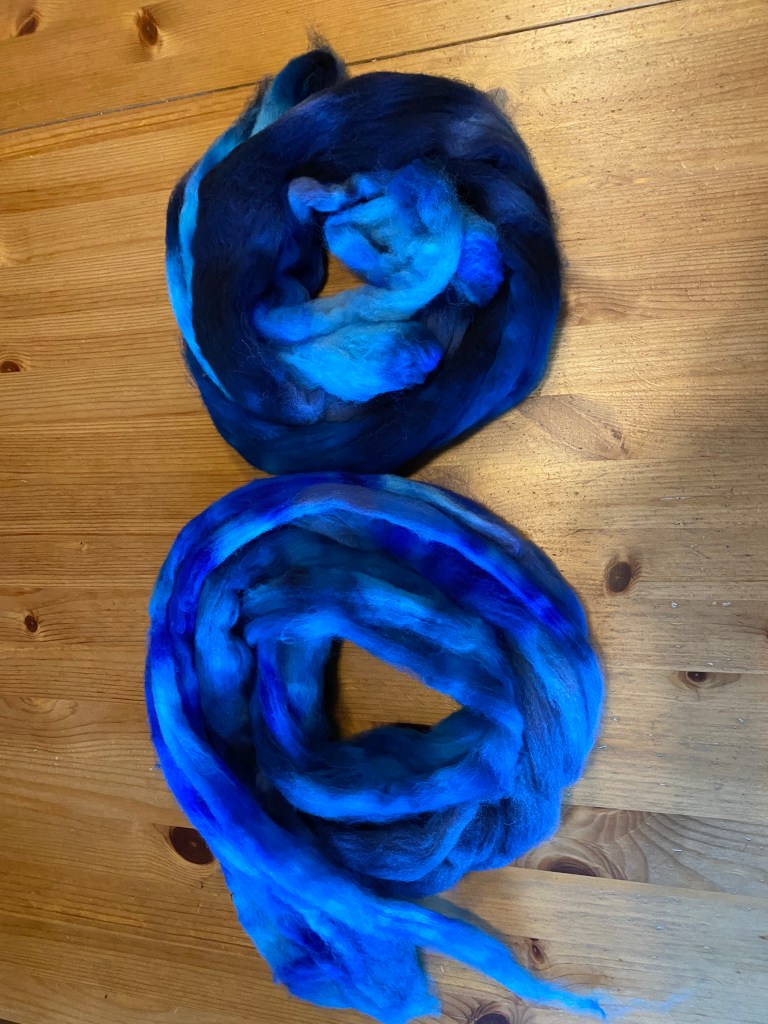
For dying this amount of fibre, acid dyes tend to be the most efficient choice. I used three different shades of blue and added the fibre for the Navajo plied yarn to the dye pot.

The socks:
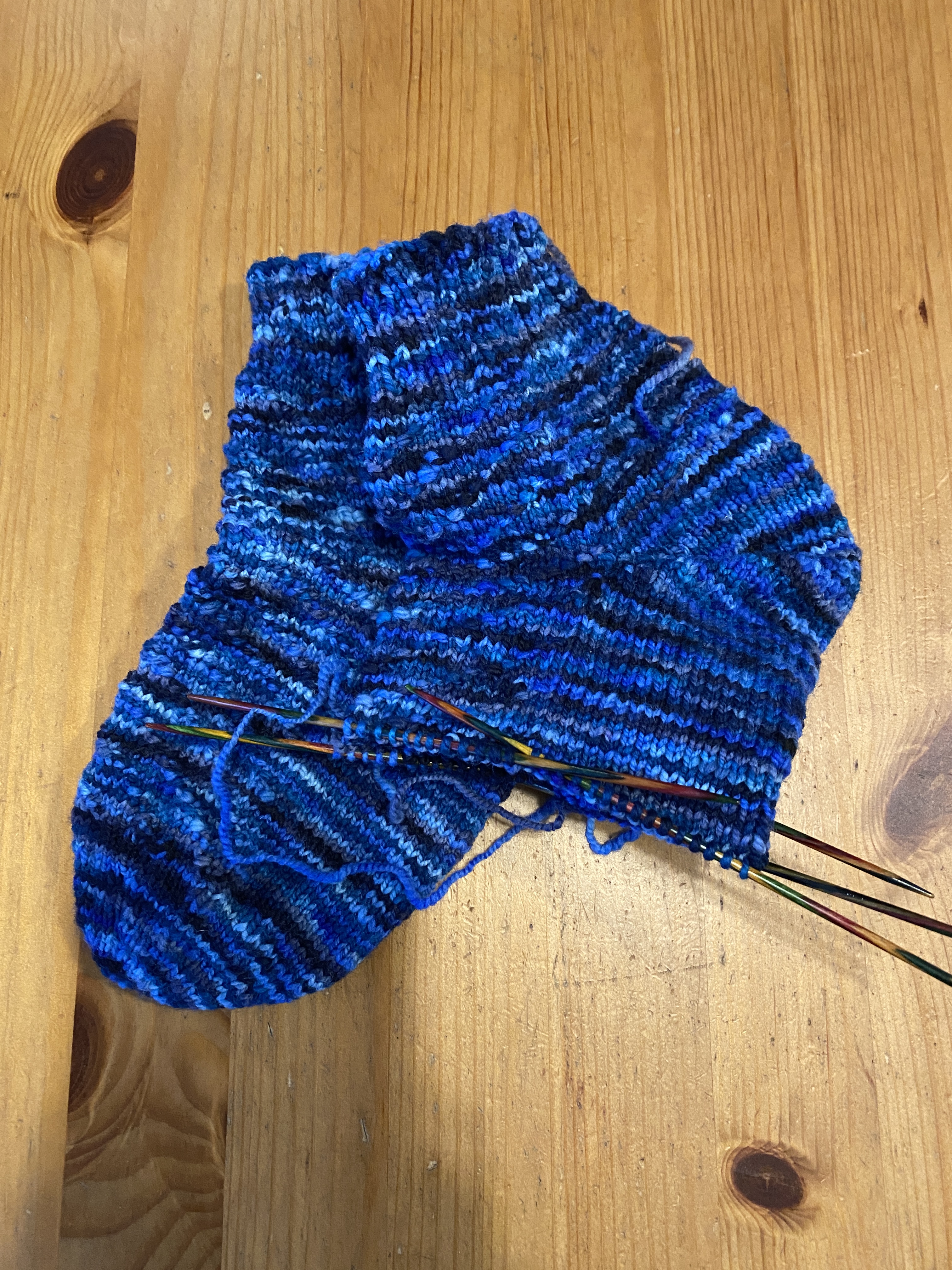
Once the yarn was dry I was all set to start knitting. My go to guide for socks is Socken Sticken by Manuela Burkhadt. I chose a pattern that promised to work well with the different shades of blue.
Knitting a small patch told me that I could use the number of stitches given in the pattern description without the need to recalculate anything.
The yarn was easy to knit, except for the fact that I had overdosed the dye, so that my fingers turned blue every time I worked on the socks.
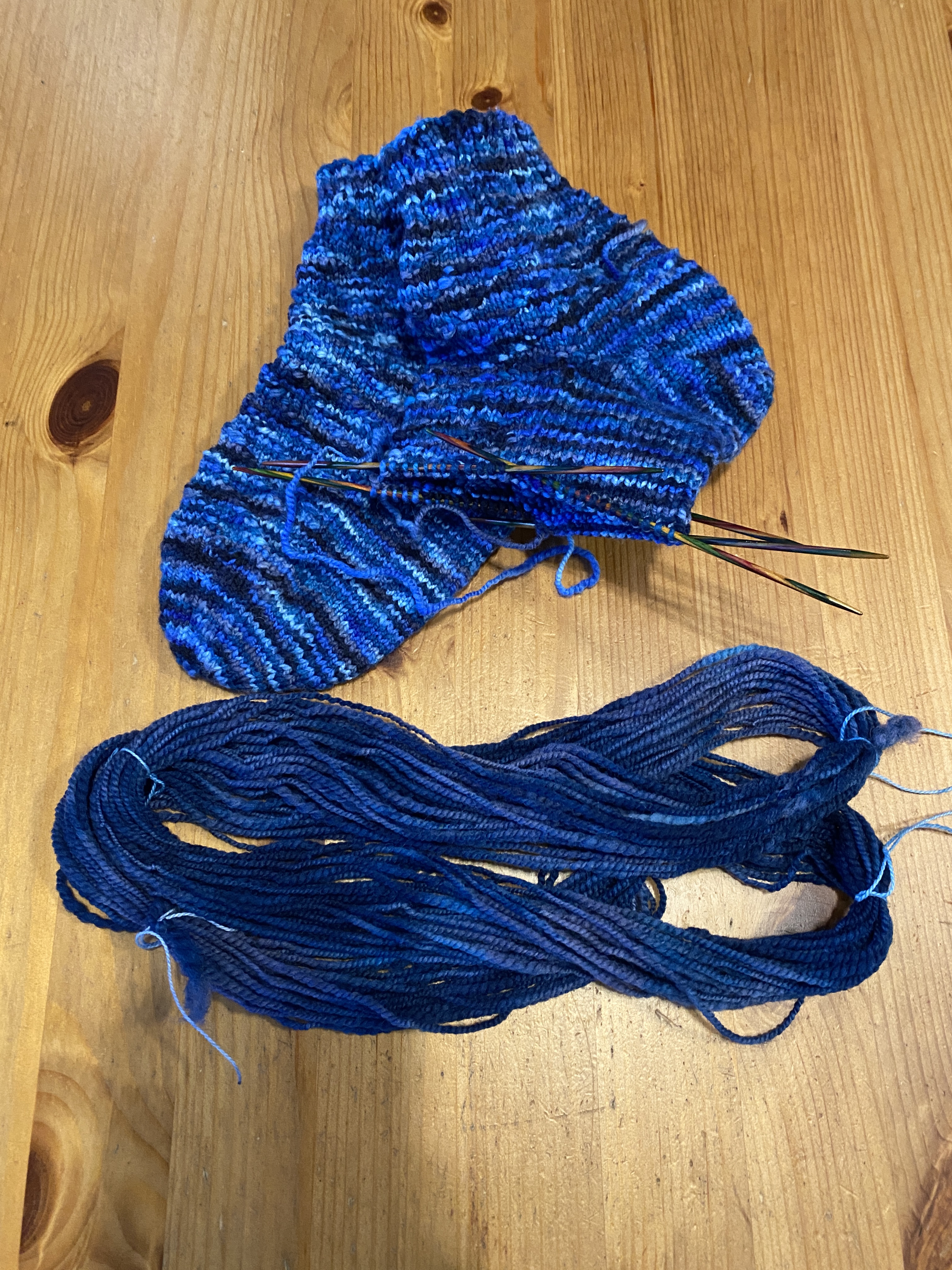
That mishap wasn’t the only complication. Half way through the second sock I ran out of yarn. Spinning knew was the only remedy. (And used up the remainder of my fibre.) I had only two blue dyes left, so I had to improvise a little.
For dying such a small amount of yarn I tend to use an old steamer for sterilising baby bottles to set the colours. It works surprisingly well, and I don’t need to pull out the dye pot.
Due to the missing shade of blue, the colours turned out a little different, but I was finally able to finish the second sock.
What I took from this experiment, beside the blue fingers and the miscalculation of the yarn, was the fact that everything took far longer than anticipated. It might be a good idea to plan ahead next time, to prevent my feet from going cold.
Time will tell how well these sock will perform once in use.
A report on the Navajo plied yarn will follow once that is done.


 Snathanna